Overview of Biofuels and Their Origins
Definition and scope of biofuels
Across South Africa, farms and towns share a quiet rhythm, and today that rhythm is fueling a hopeful shift. Global data shows that biofuels account for roughly 3% to 5% of road-transport energy, a figure that speaks to growing willingness to diversify energy sources.
Biofuels are fuels produced from recently living matter—plants, oils, or waste—that can replace or supplement fossil fuels. This means that biofuels can be made from crops, agricultural residues, algae, and used cooking oils.
- crops and agricultural residues
- algae
- waste oils and fats
Origins tether science to soil, turning waste into wattage with a logic as old as harvests and as new as the refinery. The scope of biofuels spans from biodiesel to ethanol and beyond, weaving energy into farms and towns. Each feedstock carries its own season and story, shaping livelihoods in the countryside and inviting steady, renewable energy into everyday life.
History and evolution of biofuels
Across South Africa’s sun-drenched fields and bustling towns, a quiet shift is gathering pace. Global data shows biofuels account for roughly 3% to 5% of road-transport energy, a sign that diversification is taking hold. In practice, biofuels can be made from crops, agricultural residues, algae, and used cooking oils.
The history of biofuels is a story of evolving science and local resilience. Early generations leaned on food crops, but today the landscape includes residues and non-food feedstocks, expanding farmers’ roles from harvest to refinery.
- crops and agricultural residues
- algae
- waste oils and fats
In South Africa, this evolution ties together rural livelihoods, policy, and practical energy that travels from field to road!
Importance in the current energy landscape
Across the globe, roughly 3% to 5% of road-transport energy now comes from biofuels, a quiet pivot that reshapes policy, markets, and everyday motion.
Today, biofuels can be made from a tapestry of sources — sun-kissed fields, leftover fibers, microalgae, and repurposed fats. This mosaic is not nostalgia but a challenge to the linear fuel model.
Here in South Africa, policy and rural enterprise knit together as energy travels from field to road, turning waste into power and potential. I see it in every sunlit harvest—a quiet revolution you can feel! In a landscape where sunlight abides and towns lean into resilience, biofuels anchor a broader energy transition.
Key terms and concepts (bioenergy, feedstocks, sustainability)
Across the globe, biofuels can be made from sunlit crops, waste streams, and algae—proof that energy can be redistributed, not merely consumed. In recent years, bioenergy’s slice of road-transport energy hovers near four percent, a quiet pivot that reshapes policy, markets, and daily motion. The terms bioenergy, feedstocks, and sustainability anchor this shift, guiding how we measure impact from field to fuel.
Feedstocks span a spectrum—from sun-kissed crops and agricultural residues to spent oils and microalgae. Here are its faces:
- Crop residues and dedicated energy crops
- Used cooking oil and fats
- Microalgae cultivated in ponds
- Animal fats and byproducts
Here in South Africa, policy and rural enterprise knit together as energy travels from field to road, turning waste into power and possibility. In a sunlit landscape, sustainability guides the journey—from feedstock gathering to refining, storage, and distribution—an ongoing dialogue between farmers and engineers about a cleaner, more resilient future.
Global market trends and regulatory drivers
Across continents, the engines of change run on options once considered niche. Global biofuels production has climbed nearly 8% in recent years, a quiet surge that reshapes corridors of policy and commerce. The origins are pragmatic and poetic: energy that can be harvested from what we already grow, cook, and discard. biofuels can be made from sunlit crops, waste streams, and algae, turning residues into movement and futures into fuel.
Global market trends ride the currents of regulation and innovation! Blending mandates, carbon pricing, and green investment create demand corridors that reward efficiency and local processing.
- Policy mandates and fuel-blending targets
- Investment in rural supply chains and refineries
- Advances in algae and waste-based tech
Within South Africa, these tides find a shoreline—policy dialogues with farmers, engineers, and financiers shaping how waste becomes power, and crops become momentum on the road.
Primary Feedstocks Used to Produce Biofuels
First-generation feedstocks: sugars, starches, and oils
South Africa already moves a small but telling 2% of road fuel through biofuels today, proving that real change starts on the farm. Primary feedstocks used to produce biofuels lean on time-tested, first-generation crops—plants that store energy in sugars, starches, and oils.
First-generation feedstocks span three energy-rich families:
- Sugars from sugarcane and sugar beets
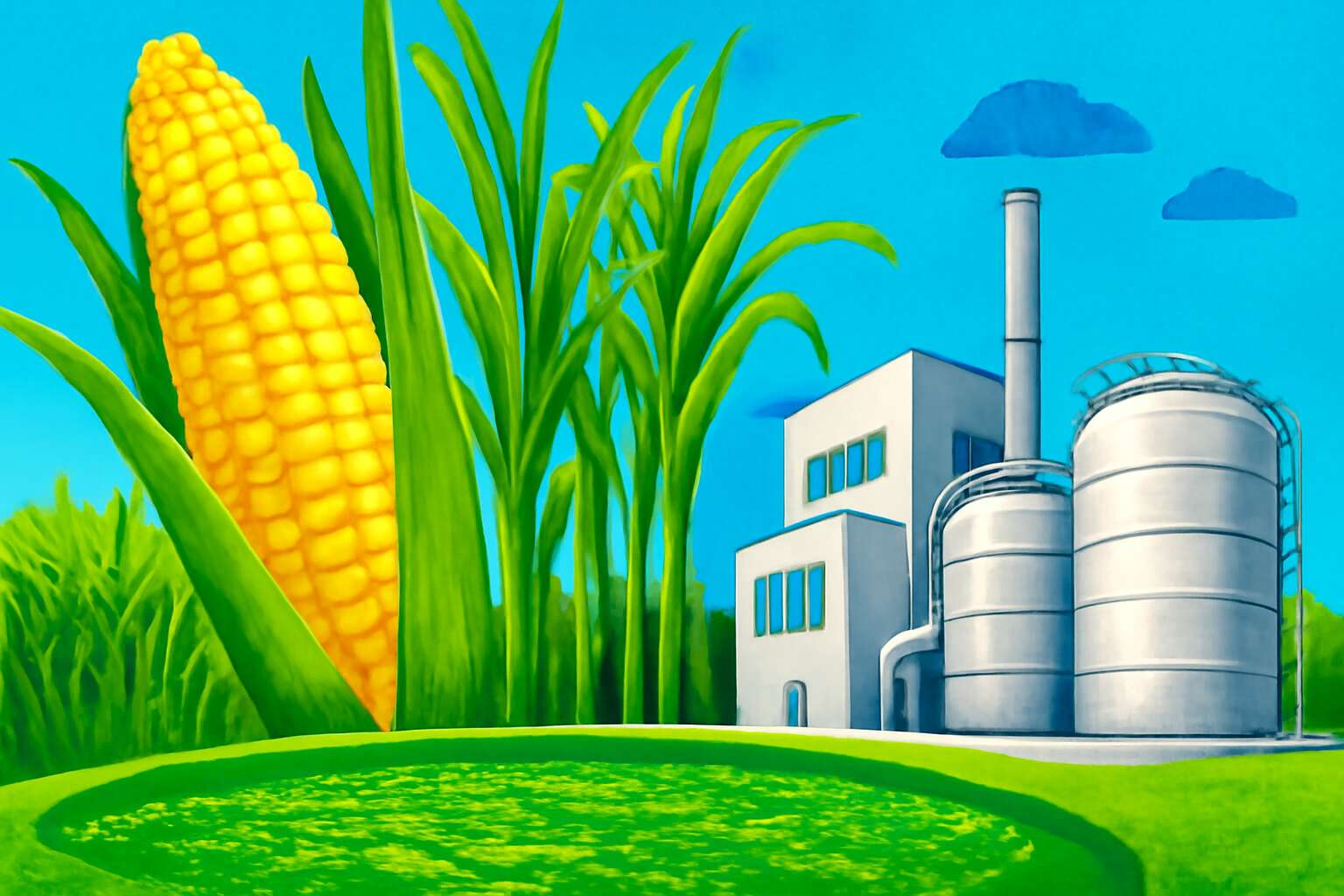
- Starches from maize (corn) and wheat
- Oils from canola, sunflower, and soybean
biofuels can be made from these first-generation feedstocks, but the sustainability ledger is evolving as farmers and processors chase higher yields with fewer inputs. In South Africa, the blend pipeline depends on regional crops and logistics.
Second-generation feedstocks: cellulosic materials and non-food crops
Second-generation feedstocks are rewriting the fuel map—cellulosic materials and non-food crops hold the promise of power without the food-for-fuel trade-off. In South Africa, the potential is tangible: biofuels can be made from reclaimed stalks, bagasse, and fast-growing grasses that don’t compete with meals on the table!
Two broad families define this frontier: cellulosic materials and non-food crops.
- Cellulosic materials: crop residues (straw, stover), orchard and forestry waste, and wood chips
- Non-food crops: switchgrass, miscanthus, willow, and poplar grown on marginal land
As researchers map yield, the statement rings clear—these sustainable, non-edible sources slip neatly into the energy mix.
Third-generation feedstocks: algae and advanced organisms
Third-generation feedstocks open a shimmering corridor where algae and advanced organisms become the alchemists of energy. biofuels can be made from microalgae oils, cyanobacteria sugars, and engineered microbes, all thriving without competing with food crops. In South Africa, these systems spark hope—coastal fleets and inland bioreactors can harvest fuel while sparing farmland.
- Microalgae and macroalgae varieties optimized for high lipid or carbohydrate yields
- Engineered microorganisms that convert CO2 directly into fuels
- Integration with wastewater and saline-water resources to reduce fresh-water use
Yet the practical marvel lies in energy balance and lifecycle sustainability. While costs shrink with scale and technology matures, this frontier invites collaborative pilots across SA’s coastal labs and savannah testbeds. Imagine the possibilities!
Regional availability and supply chains
South Africa’s energy future glows with possibility: biofuels can be made from a surprising palette, turning sunlight, sugars, and oils into liquid energy. Our landscape—sun-drenched sugar belts, coastal clusters, and inland farms—shapes supply chains from field to pump!
Primary feedstocks used to produce biofuels hinge on three rhythms: sugars and starches from sugarcane and maize, oils from canola and sunflower, and lignocellulosic residues for new life. SA’s story blends farming pace with industry, moving fuels from field to pump.
- Sugars and starches from sugarcane, maize, and sorghum for ethanol
- Seed oils (canola, sunflower, soybean) for biodiesel and hydrotreated fuels
- Residues from forestry, agriculture, and urban waste for advanced fuels
- Algae and aquatic biomass nurtured by coastal and wastewater systems
Regional availability and supply chains hinge on port hubs like Durban and Cape Town, inland biorefineries, and cross-border logistics that link farms to refineries while protecting water and land resources.
Environmental impacts of different feedstocks
Every drop carries a shadow—the same sun powering farms could power transport. Across the field’s horizon, we learn that biofuels can be made from sun-warmed crops, pressed oils, and stubborn residues, yet each path casts a different shadow on land, water, and air. Some routes lower waste and spark local industry; others demand irrigation or press on food security. We weigh these echoes before the fuel touches the pump, letting lifecycle numbers and human costs guide the balance.
- Residues and wastes boost circularity, cutting disposal burdens.
- Crop-based fuels can raise land and water demands.
- Oil crops deliver energy density but may affect food security.
- Algae and aquatic systems promise, yet require energy-intensive processing.
In South Africa, lifecycle calculations blend science with policy, shaping how these trajectories touch communities and ecosystems.
How Biofuels Are Made: Processes and Technologies
Transesterification and ester blends (biodiesel)
Globally, biofuels account for roughly 4% of road transport fuels, a share that continues to rise as policy and technology converge. When considering what biofuels can be made from, the question widens beyond sustainability to the chemistry, catalysts, and supply chains that unlock energy from everyday inputs. Transesterification and ester blends (biodiesel) stand as a proven route, turning fats and oils into a compatible diesel substitute that quiets engine vibrations and emissions in many modern fleets.
Process-wise, the conversion is precise and scalable. Here are the core steps:
- Feedstock preparation and pretreatment
- Transesterification reaction with a catalyst
- Separation, washing, and purification to remove glycerin and catalysts
- Quality testing and blending into biodiesel blends for end use
In South Africa, this approach aligns with local feedstock diversity, from waste oils to non-food crops, enabling regional resilience.
Fermentation to ethanol and upgrading processes
Globally, biofuels can be made from a surprising menu of feedstocks, and the lab bench keeps morphing as policy and tech converge. Roughly 4% of road fuels are bio-based—and that share is climbing as engines get smarter and cleaner.
Fermentation to ethanol forms the backbone for many pathways. Sugars are fermented by yeast into ethanol and CO2. Upgrading follows—purification, dehydration, and, where needed, refining to ensure gateway compatibility with existing fuel grids.
- Fermentation converts sugars to ethanol using yeast
- Distillation and dehydration produce high-purity ethanol
- Upgrading and blending integrate ethanol into fuels
Locally, South Africa taps diverse feedstocks—from sugarcane residues to molasses and agricultural by-products—to keep fermentation lines humming and the energy mix resilient.
Gasification and synthesis to drop-in fuels
Gasification and synthesis offer a flexible route to fuels that slot neatly into existing engines. biofuels can be made from a surprising range of feedstocks, including residues, waste, and dedicated crops. In practice, solid biomass or solid waste is heated under controlled conditions to produce a renewable syngas—carbon monoxide and hydrogen—that can be steered toward clean, drop-in fuels. The elegance lies in turning variety into compatibility: flexible supply chains, fewer food‑crop pressures, and cleaner combustion.
- Gasification of diverse feedstocks to a usable syngas
- Fischer–Tropsch or other synthesis to hydrocarbon chains
- Upgrading through hydroprocessing to meet drop-in fuel specs
- Blending and distribution within existing fuel grids
In South Africa, abundant bagasse, agricultural residues, and municipal wastes offer steady streams for modular gasification plants, aligning with national aims for energy security and cleaner transport. It’s a future where technology and policy converge to power a more resilient, lower-emission mobility landscape.
Algae-based conversion technologies
Algae carry a quiet sunlight magic—the kind that shows how biofuels can be made from green droplets while not gnawing at precious farmland. In labs, ponds, and pilot fleets, researchers tease out who they are and what they carry: lipids, carbohydrates, and resilient proteins, all amenable to conversion. The result is a spectrum of fuels tuned to engines and climates, with the potential to sip carbon from the air rather than steal it from the soil.
Algae-based conversion technologies choreograph biology with engineering:
- Hydrothermal liquefaction to bio-crude, enabling refinery-style upgrading
- Biochemical processing that harvests sugars and converts them into hydrocarbon backbones
- Integrated photobioreactors and nutrient recycling for scalable, low-water operation
The dance is delicate, data-rich, and location-smart, bringing a new cadence to South Africa’s energy mix.
Catalytic upgrading and hydroprocessing for advanced fuels
Catalytic upgrading uses refined catalysts to rearrange heavy bio-oil molecules into lighter, high-octane streams. Hydroprocessing, or hydrogen-supported upgrading, saturates double bonds and removes oxygen, yielding clean, drop-in fuels compatible with existing engines. Together, these technologies unlock a pathway to advanced fuels with minimal processing steps after harvest—fuels that fit today’s engines!
This is how biofuels can be made from diverse feedstocks and still end up in the petrol and diesel pools you see in a South African refinery. The workflow is modular: feedstock selection, catalytic transformation, then final polishing and blending to meet local specs.
- Catalytic upgrading to break down long chains
- Hydroprocessing to remove oxygen and impurities
- Distillation and blending for lifecycle-ready fuels
Applications and Performance of Biofuels
Transportation uses in road, aviation, and marine sectors
Fleets marching toward net-zero are turning to fuels with a mythology all their own. In aviation, sustainable options can cut life-cycle emissions by up to 80% compared with fossil jet fuel (biofuels can be made from diverse feedstocks—sugars, oils, and beyond).
On South Africa’s roads, biodiesel blends and ethanol fuels are powering urban buses, trucks, and taxis with cleaner burn and smoother performance.
- Blended biodiesel for fleets
- Ethyl alcohol blends for city driving
- Drop-in diesel for existing engines
Air travel benefits from SAF and other advanced fuels; performance remains reliable at scale, with energy density, cold-weather resilience, and compatible infrastructure enabling airports across SA to diversify.
Marine transport uses biofuels like biodiesel and renewable diesel to cut sulfur and particulates; ports and supply chains adapt through flexible blending and upgrading for ships, ferries, and fishing boats.
Engine compatibility and performance considerations
Engineers and drivers feel it in the cabin and on the road: biofuels can be made from a spectrum of feedstocks, and the right choice can smooth maintenance while trimming emissions. When selecting fuels for heavy fleets, compatibility with seals, gaskets, and injectors matters as much as energy content.
Practically, several performance knobs guide selection:
- Engine compatibility and blend limits for diesel systems
- Energy density and driving range implications
- Cold-weather behavior and fuel stability
- Lubricity and deposit risks in fuel lines
Across South Africa, fleets report smoother starts and cleaner exhaust when blends are matched to equipment and climate—like a trusted tractor springing to life after a chilly dawn.
Lifecycle emissions and environmental benefits
South Africa stands at a fuel crossroads: biofuels can be made from a spectrum of feedstocks, and lifecycle data show emissions dropping up to 60% compared with fossil diesel. That shift isn’t abstract—it’s a practical lever for cleaner air and quieter streets.
Biofuels offer real-world applications in fleets and industry with tangible performance gains. Smoother starts, reduced deposits, and overridable energy content depend on feedstock choice and processing; the right blend aligns with existing hardware and climate, delivering meaningful lifecycle benefits.
Across South Africa’s landscapes, local supply chains can reduce transport emissions and support resilience. By leveraging waste streams and non-food crops, diverse resources unlock environmental benefits while keeping engines running.
Economic viability and cost trends
South Africa’s transport arteries demand resilience and cleaner air as seasons shift and freight keeps moving. biofuels can be made from a spectrum of feedstocks, and when blends are tuned to local realities—engine types, climate, and maintenance windows—the payoff is tangible: smoother starts, steadier power, and lower emissions.
Economic viability hinges on feedstock costs, conversion efficiency, and policy signals. As South Africa expands advanced refining and widens waste-to-fuel streams, cost trends point toward more stable totals and competitive “well-to-wheel” pricing.
- Local supply chains reduce transport exposure and price volatility
- Blends aligned with existing fleets extend asset life and unlock tax or subsidy incentives
In practice, fleets—public transport, mining, logistics—see smoother starts and cleaner operation when the blend suits the hardware and climate. This pragmatic mix shows how diverse resources underpin cleaner air and a more robust local economy.
Policy incentives and sustainability standards
Cleaner air is not a humanitarian slogan—it’s a competitive edge for South Africa’s transport corridors. Global biofuels demand is rising by about 5% annually, and policy signals back that momentum. biofuels can be made from a spectrum of feedstocks, and when blends align with local operations, performance mirrors the promise: smoother starts, steadier power, and reduced emissions on the road, rail, and port. It’s tangible—and it’s happening now!
Policy incentives and sustainability standards convert potential into practice. In South Africa, blending mandates, green procurement policies, and carbon-conscious budgeting incentivize fleets to transition. Sustainability frameworks—grounded in lifecycle analysis and independent verification—keep promise honest and traceable. For fleets, the payoff is predictable: lower operating costs, longer asset life, and cleaner air.
- Blending mandates and preferential public procurement that accelerate adoption
- Tax incentives, subsidies, and financing for compliant refineries and distributors
- Independent lifecycle assessments and standardized reporting to ensure verifiable emissions reductions

0 Comments