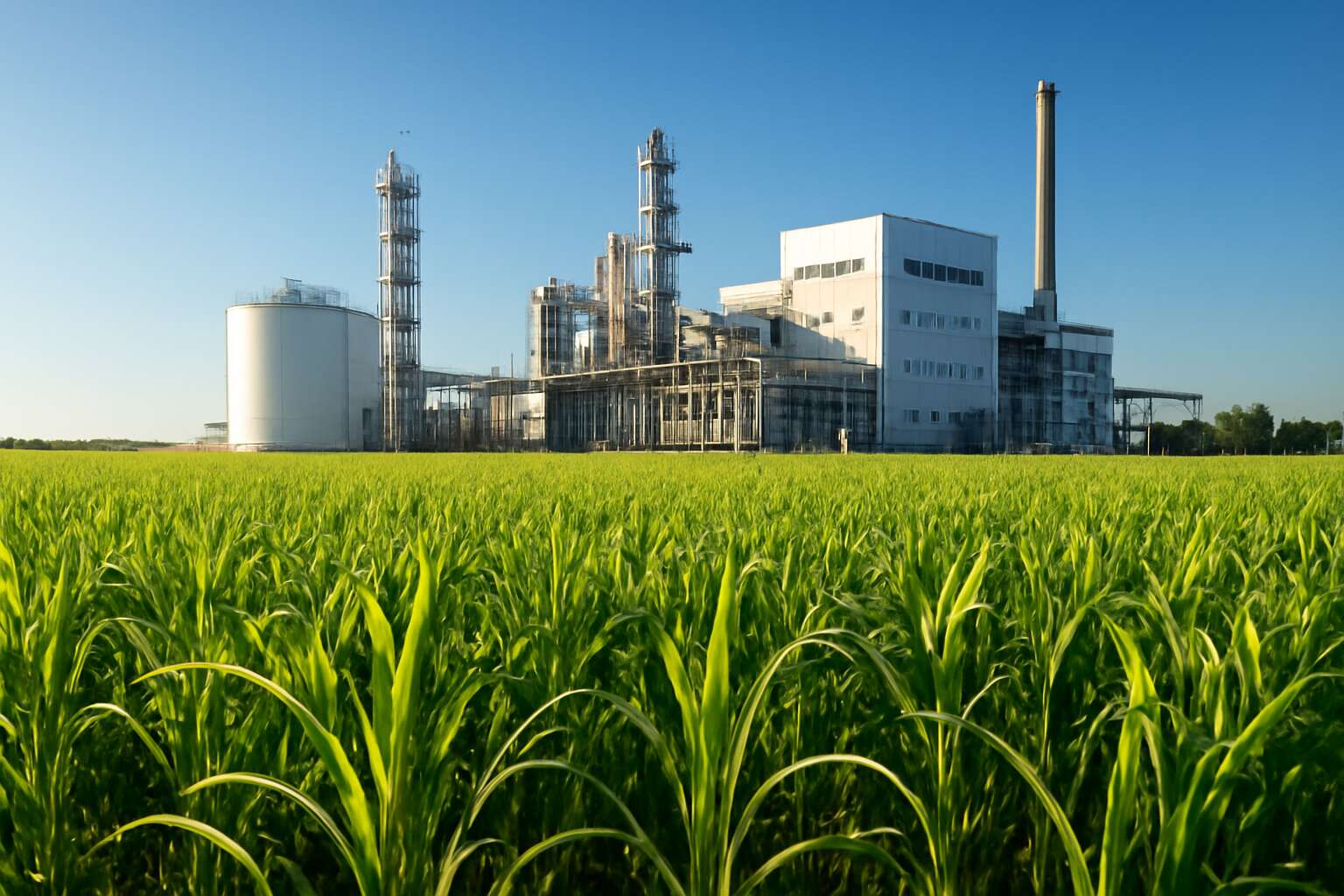
Strategic outline for renewable fuels in sustainable development
Foundations and core concepts
“Energy resilience is a living thing,” a policy thinker declares; in South Africa, biofuels and sustainability braid together a more autonomous energy tapestry. They offer a practical bridge between abundant local feedstocks and a less oil-dependent future.
Strategic outline for renewable fuels in sustainable development centers on three pragmatic pillars:
- Feedstock sovereignty and local value chains across SA
- Lifecycle thinking from cultivation to combustion
- Policy coherence and transparent carbon accounting
By weaving these threads—local ownership, rigorous life-cycle assessments (LCAs), and flexible infrastructure—South Africa can sustain growth and environmental justice without compromising grid resilience.
Fuel types and emissions profiles
South Africa stands at a crossroads where mobility meets resilience. A measured shift toward renewable fuels could slice transport emissions by as much as half over the next decade, especially when local feedstocks are tapped with care. This fusion—biofuels and sustainability—breathes life into regional value chains and steadies communities in a volatile energy era!
- Sugarcane ethanol: strong lifecycle gains when mills run on cane residues and bagasse.
- Waste-oil biodiesel: reduces emissions while avoiding edible-feed competition.
- Advanced biofuels (algae, lignocellulosic feedstocks): deep-cut potential, balanced by scale and cost challenges.
From feedstock choices to end-use, the emissions profiles reveal a spectrum of opportunities that respect grid reliability and local livelihoods, weaving a decarbonization continuum into South Africa’s energy story.
Feedstocks and supply chain
Across South Africa, a strategic upgrade to renewable fuels could reshape mobility and jobs. I’ve seen how a real shift toward biofuels and sustainability could lower transport emissions while strengthening rural value chains.
Strategically, feedstock mapping and a tight, local supply chain are the backbone. From sugarcane residues to waste oils and algal feedstocks, diversity lowers risk and supports energy independence. The challenge is coordinating farmers, mills, refiners, logisticians, and financiers so that chemistry and currency align—without compromising livelihoods.
- Policy coherence and stable incentives
- Local feedstock assessment and sourcing hubs
- Storage, logistics, and port-ready infrastructure
- Financing models that include smallholders
- Standards, verification, and traceability
When these elements are woven into regional governance, the supply chain becomes a buffer against price shocks and a catalyst for regional development—an enduring note in South Africa’s sustainable development story.
Policy, economics, and market dynamics
An ambitious shift toward renewable fuels could reshape mobility and rural livelihoods across South Africa, with analyses suggesting meaningful emissions reductions within a decade. This is the crossroads where policy clarity, economics, and biofuels and sustainability intersect, creating a practical path rather than a political dream.
A winning strategy threads policy certainty with stable incentives, regional maps of feedstock corridors, resilient storage and port access, inclusive financing that reaches smallholders, and rigorous, verifiable standards. The aim is a smooth choreography among farmers, mills, refiners, logisticians, and financiers—without tripping over red tape.
When regional governance aligns these threads, the supply chain becomes a buffer against price volatility and a driver of regional development, giving the local sustainable energy story a steady, homegrown rhythm.
Technology pathways and future outlook
Across South Africa, a deliberate pivot toward renewable fuels could slash road transport emissions by up to a third within ten years. That audacious forecast rests on clarity, stable incentives, and a willingness to test borders, budgets, and bravado alike—believe me, I’ve seen the map. It’s a practical crossroads, not a political daydream.
To chart that course, technology pathways crystallize into four pragmatic tracks:
- Waste-to-fuel upgrades turning waste into drop-in fuels
- Power-to-liquid routes for aviation and heavy transport
- Algae, non-edible crops, and side-streams for high energy density
- Modular refineries enabling regional, small-scale production
Looking ahead, the future is modular, traceable, and resilient—driven by digital logistics, regional feedstock maps, and transparent standards. In this dance, farmers, refiners, and financiers choreograph progress, with biofuels and sustainability as twin lodestars.

0 Comments