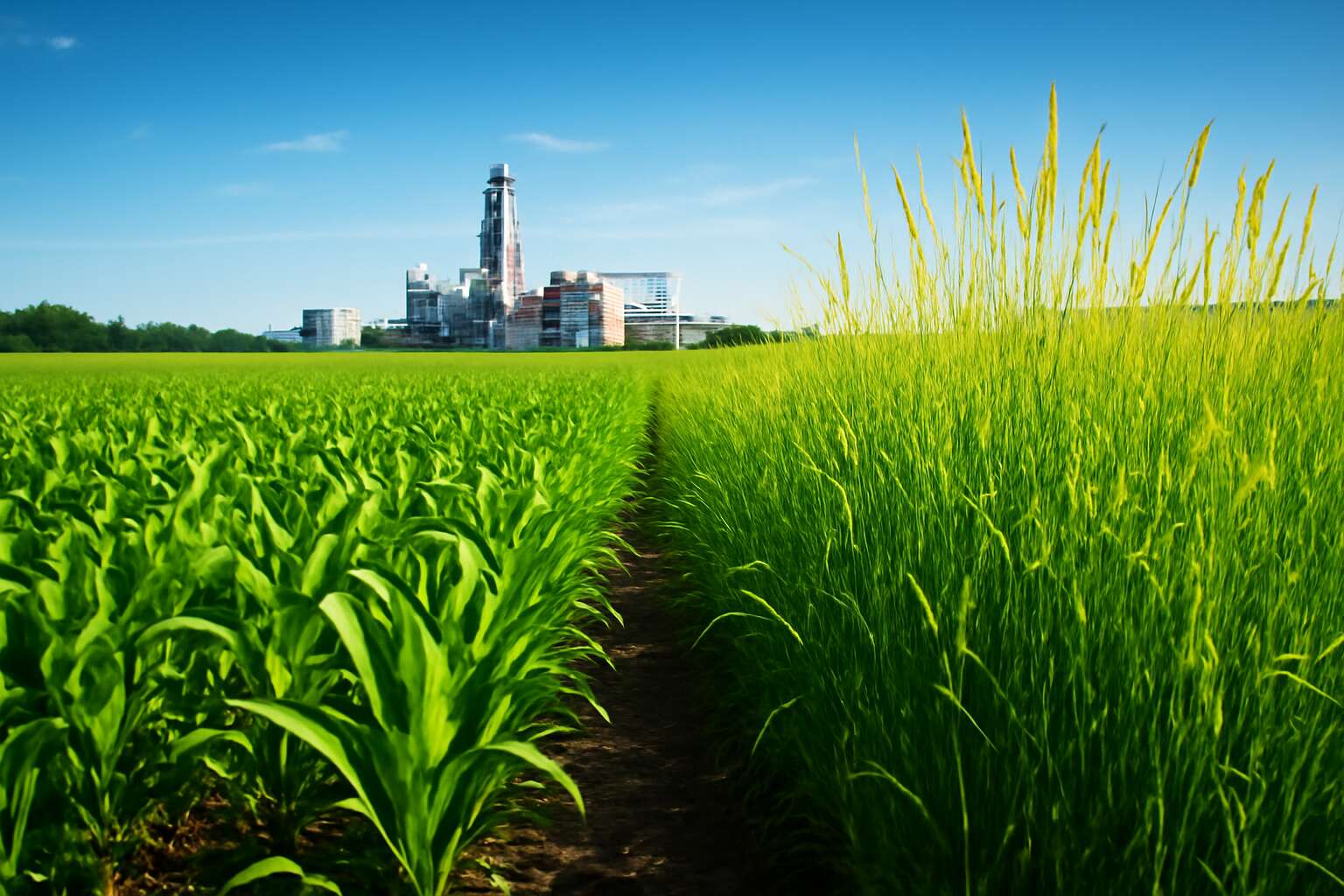
Understanding biofuel crop fundamentals
Definition and scope of feedstock crops
Energy grows in the fields, and in South Africa that truth is waking up in real terms. Farmers and researchers watch feedstock choices reshape harvests and the fuels that power everyday life. The idea behind biofuels crops is simple yet profound: sunlight saved as liquid energy for transport.
Feedstock crops are grown primarily to be converted into fuels such as ethanol or biodiesel, spanning sugar, starch, and oil pathways. In practice, several families supply the feedstock:
- Sugar-rich crops such as sugarcane and sweet sorghum
- Starchy grains like maize and cassava
- Oilseed plants such as canola, sunflower, and soy
These options map to local soils, climates, and markets, offering a flexible backbone for future transport and the promise of biofuels crops.
Behind the numbers, the moral question remains: how do we align field-scale energy with people, soil, and water? The scope of this pursuit reaches beyond profit, tracing a line between rural livelihoods and national resilience in biofuels crops ecosystems.
How feedstock choices influence sustainability
A across South Africa, the promise of biofuels crops is more than rhetoric; lifecycle studies suggest well-managed feedstock choices can cut greenhouse gas emissions by up to 60% compared with fossil fuels. That statistic translates from labs to fields, where sunlit crops become liquid energy for transport and resilience.
Understanding how feedstock choices influence sustainability means looking at the whole picture: water use, soil health, and how energy is recovered in processing. Consider these levers!
- Water footprint and local rainfall patterns
- Soil health, crop rotation, and nutrient management
- Energy balance from field to refinery and feedstock yield
In this dance of sun and soil, these crops can thread rural livelihoods with national energy security—without losing sight of people, landscape, and water.
Key players in the biofuel farming sector
Sun, soil, and signals of change: in South Africa, biofuels crops are not mere rhetoric but a living blueprint. “Fueling communities with durable energy,” a local agronomist reminds us, as fields wake to sun and responsibility.
Key players thread knowledge, financing, and policy into viable, local streams.
- Farmers and farm cooperatives
- Biofuel processors and refineries
- Research universities and extension services
- Government policy bodies
- Financiers and green investors
Together, these voices cradle resilience into a South African energy mosaic that livelihoods cherish and landscapes endure.
Common misconceptions about biofuel crops
In South Africa, the soil is a quiet oracle, and biofuels crops carry its unspoken forecast. A local agronomist reminds us: “Biofuel futures are written in the furrows.” Understanding these crops means reading seed chemistry—oil, sugar, or fibre—against climate, water, and soil life. It’s not a sprint for energy but a long conversation about stewardship: choosing resilient varieties, ripe for local rotations, that sustain livelihoods while easing imports. The field becomes a dialogue among farmer, researcher, and policy, shaping resilient communities and landscapes. What a field of possible futures!
Common misconceptions about biofuels crops persist; they reduce to a single metric or a clash with food. Let’s untangle a few:
- they compete with food production for land.
- Higher yields alone guarantee sustainability without regard to water or soil health.
- not all feedstocks perform the same across South Africa’s varied climates.
Major crops used in biofuel production
Corn and sugarcane for ethanol
Global ethanol output runs into tens of billions of litres each year, and two crops—corn and sugarcane—anchor this quiet energy revolution in the world of biofuels crops. Their trajectories shape farms, futures, and the way towns imagine energy security.
Corn offers a steady, scalable feedstock through dry-mill processing, while sugarcane delivers high sugar content that speeds fermentation. The byproducts add value: distillers grains from corn and bagasse, the cane fiber, which can power the plant itself.
- Corn (maize): reliable yields, compatible with existing grain-handling systems and regional storage.
- Sugarcane: high sucrose content, thrives in warm climates, with bagasse powering co-generation of heat and electricity.
In South Africa, sugarcane is strongest in coastal provinces like KwaZulu-Natal and Mpumalanga, while maize dominates the inland belt. Improvements in irrigation, pest resistance, and variety development are shaping who grows what, and how efficiently biofuels crops convert sun, soil, and water into energy.
Rapeseed, soybean, and palm oil for biodiesel
Global biofuels production runs in multi-billion-liter scales, and biofuels crops like rapeseed, soybean, and palm oil anchor biodiesel’s momentum. These crops turn field heat into usable fuel, shaping regional economies and trade routes across oceans and borders.
Rapeseed oils offer steady crush yields and exceptional cold-weather performance, making them a backbone for European and Southern African biodiesel blends! Soybean oil brings high yield per hectare and versatile refining, a quiet workhorse in many nurseries of energy security. Palm oil delivers outstanding energy density, accelerating fermentation and conversion into clean-burning biodiesel—though sustainability frameworks guide its cultivation.
- Rapeseed: moderate oil, good cold-flow, fits existing refineries.
- Soybean: high oil yield, scalable biodiesel feedstock.
- Palm oil: very high oil content, high energy density, sustainability oversight required.
In South Africa, sourcing and sustainability considerations shape which crop dominates regional biodiesel programs, balancing soil health, water use, and local markets.
Algae and non-traditional crops for advanced fuels
Across the global fuel map, microalgae and other non-traditional crops are stealing the show, delivering punchier energy yields per hectare than many conventional rivals. Some researchers project microalgae can produce thousands of litres of biodiesel annually, a win for biofuels crops that drink CO2 for breakfast.
Algae offer high oil content, rapid growth, and the flexibility to thrive on non-arable land or saline water. They can be fed with waste streams and captured CO2, which accelerates the path to scalable, sustainable fuels.
Consider these non-traditional contenders:
- Microalgae and macroalgae
- Jatropha
- Miscanthus
- Camelina
In South Africa, these routes matter as we balance water use, soil health, and local markets, giving the regional farming landscape a broader canvas.
Dedicated energy crops and perennial options
On SA’s sunbaked plains, dedicated energy crops are delivering steadier yields per hectare than many annual rivals. Perennial options, with deep roots and multi-year cycles, translate climate variability into reliable feedstock for biofuels crops. Switchgrass constrains water use while delivering durable biomass; willow and poplar, long-lived and coppicable, offer woody residues that lend themselves to second-generation fuels; energy sorghum, a cousin of table sorghum, thrives where rainfall is sporadic and soils are thin.
Major crops in this category include:
- Switchgrass
- Willow
- Poplar
- Energy sorghum
By diversifying into these energy crops, South Africa can protect soil health, reduce water stress, and open new markets for rural communities; the perceptible shift is away from monoculture energy crops toward resilient perennials.
Production, processing, and supply chain
Cultivation practices and crop yields
Across South Africa, biofuels crops are no longer fringe players; they’re a growing pillar of the energy mix, contributing tangible value to transport and rural economies. Production, processing, and the supply chain hinge on field-to-factory coordination. From the harvest in regional farms to mills, refineries, and final distribution, the journey is linear yet sophisticated.
- Sourcing and harvest from regional fields
- Extraction or fermentation at regional mills
- Conversion via transesterification or ethanol production
- Refining, blending, and distributing through existing networks
On the cultivation side, practices focus on soil health, water stewardship, and resilient varieties. Crop yields depend on rainfall, soils, and access to irrigation; farmers using precision farming and rotation see more stable outputs. SA’s climate and policy support—through drought-tolerant breeds and targeted input programs—help lock in steady production.
Harvesting, extraction, and conversion technologies
From field to refinery, biofuels crops in South Africa are moving from niche to backbone of the energy mix. The journey sweeps from regional farms to mills, refineries, and final distribution with steady, purposeful cadence.
- Harvesting and on-farm prep to maximize sugar and oil content
- Extraction or fermentation at regional mills
- Conversion via transesterification for biodiesel or ethanol production
- Refining, blending, and distribution through existing networks
Quality control, storage, and transport stitch the chain together, ensuring steady supply to transport networks and rural economies.
Storage, logistics, and feedstock quality control
In South Africa, every tonne moved from field to refinery is a hinge—unlocking power for communities and corridors when the chain breathes with steady cadence. I hear the engines of commerce hum!
From the threshing shed to regional mills, production and processing seek flawless input: careful drying, clean sorting, and respectful handling that preserve sugar and oil content.
- Moisture and temperature control to prevent spoilage
- Contaminant screening and pest management
- Full traceability and quality certification across stages
Storage, logistics, and feedstock quality control stitch the journey: on-farm depots, rail and road corridors, moisture checks, pest protection, and traceability that keeps every link accountable and visible for biofuels crops.
These rhythms—production, processing, storage, and distribution—turn a harvest into a resilient, regionally anchored energy thread that powers transport and livelihoods with quiet, deliberate reliability.
Policy frameworks, incentives, and subsidies
Policy frameworks for production, processing, and the supply chain anchor the economics of biofuels crops. In South Africa, predictable blending mandates, sustainability criteria, and tariff certainty reduce risk for farmers and refiners alike. When rules are coherent, investors back long-term projects and communities gain steady employment. This isn’t abstract politics—it’s the quiet engine of regional energy resilience.
Incentives should bridge research, build-out, and smallholder inclusion, without distorting markets. A thoughtful mix rewards output without locking farmers into fragile price cycles. The following levers help ensure a stable pipeline from field to refinery:
- Tax incentives and accelerated depreciation for processing facilities
- Subsidies for on-farm storage, drying, and handling equipment
- Concessional financing and grant programs to de-risk capital
- Streamlined permitting and land-use approvals
Market demand and price drivers
biofuels crops are not abstract terms; they map directly to jobs, grids, and regional resilience. Production, processing, and the supply chain hinge on predictable demand, fair pricing, and the nimbleness of logistics. In South Africa, blending mandates, quality standards, and tariff clarity shape the risk profile for farmers and refiners—turning long-term projects into community commitments and dependable regional energy security. I watch price signals the way a sommelier reads vintages—a 5% shift in diesel benchmarks can rewrite margins overnight!
Market demand and price drivers include:
- Blending mandates and refinery demand
- Global diesel trends and currency volatility
- Storage, logistics, and crop yields
- Export opportunities and local consumption
Environmental impacts and sustainability metrics
Lifecycle assessment and greenhouse gas emissions
In South Africa’s shifting energy dawn, the edge of a field can tilt the balance. Lifecycle data on biofuels crops glow with a stark statistic: greenhouse gas emissions can fall by 40% to 60% versus petrol, depending on crop choice and farming practices.
Lifecycle assessment (LCA) measures the journey from field to fuel, weighing soil carbon, irrigation, fertilizer, processing energy, and transport. Greenhouse gas emissions are a central metric, shaped by land-use changes, cultivation inputs, and the efficiency of conversion technologies.
- Land-use change and soil carbon dynamics
- Fertilizer use and energy inputs in cultivation
- Conversion efficiency and processing energy
- Distribution, storage, and transport emissions
In this landscape, sustainability demands a careful balance of yield, water stewardship, and biodiversity, ensuring local communities benefit from resilient feedstock supply chains and transparent reporting.
Land use, biodiversity, and habitat considerations
Across South Africa’s sunlit velds, the story of biofuels crops unfolds like a map where energy meets ecology—vital and vibrant! The environmental footprint isn’t just about kilowatts; it’s about whether fields become corridors for biodiversity or quiet barriers to native habitats.
Land-use choices ripple through water cycles, soil carbon, and wildlife. Thoughtful siting, buffer zones, and crop rotation can protect pollinators and reduce erosion, while monocultures risk compacted soils and faded habitats.
- Land-use planning and zoning to preserve rare habitats
- Biodiversity protection and habitat connectivity for wildlife
- Water stewardship and efficient irrigation to safeguard scarce resources
- Monitoring, reporting, and transparency in land management
Metrics matter: biodiversity indices, soil organic carbon, and habitat quality help gauge true sustainability, ensuring the energy from these crops respects landscapes as much as it fuels economies.
Water use, soil health, and resource stewardship
In the sunlit corridors of South Africa’s farms, water security frames every decision. Biofuels crops promise energy with less collateral damage, yet only when stewardship guides every hectare. A veteran agronomist’s warning lingers: “the footprint we leave in the soil outlives the fuel we harvest.” The challenge is balancing yield with resilience.
Measured sustainability hinges on water use, soil health, and resource stewardship.
- Water use efficiency metrics for irrigation to curb waste.
- Soil organic carbon, structure, and moisture-retention indicators.
- Integrated nutrient management and erosion-control benchmarks.
With transparent reporting and adaptive management, the environmental footprint becomes a clear map—one that protects water resources, promotes soil vitality, and invites prudent investment across South Africa’s farming heartlands.
Economic viability, subsidies, and impact on rural economies
As one veteran agronomist warns, ‘the footprint we leave in the soil outlives the fuel we harvest.’ In South Africa, the environmental impacts of biofuels crops hinge on disciplined stewardship, transparent reporting, and a footprint that balances emissions with biodiversity and long-term soil health. The result is a cultivation path that sustains harvests without eroding the future.
- Rural livelihoods strengthened by secure off-take and fair price discovery
- Local processing hubs that create jobs and cut transport emissions
- Subsidies tied to sustainable practice, transparency, and performance
Economic viability rests on stable markets, credible policy, and investment in rural economies through cooperatives and smallholders. When subsidies reflect measured performance—reduced emissions, efficient water use, and soil stewardship—the spread of prosperity follows the harvest’s tracks, lifting communities and weaving resilience into the landscape.
Global trends, challenges, and opportunities
Regional production hotspots and trade flows
Global demand for biofuels crops has doubled over the past decade, reshaping energy policy and rural livelihoods. In South Africa, this momentum aligns with cleaner transport goals and local processing. The shift boosts biofuels crops and smarter farming, building more resilient supply chains and clearer sustainability benchmarks.
Regional production hotspots and trade flows are evolving. Major corridors connect South Africa, Brazil, the US, and Europe, with refined fuels moving through well-developed ports and rail networks. This dynamic opens opportunities for partnerships around biofuels crops and regional processing hubs.
- Sugarcane and corn exports dominate markets.
- Cross-border corridors boost regional biofuels crops trade.
Challenges and opportunities loom large. Climate risk, water stress, and logistics gaps test viability, yet the upside includes rural job creation, investment in local refineries, and technology spillovers. With coherent policy signals, cross-border trade can accelerate the scale of biofuels crops across the region.
Technology breakthroughs and next-generation crops
Global demand for biofuels crops has doubled in the last decade, and South Africa stands at a crossroads where cleaner transport meets rural renewal. The mood in fields and policy rooms alike is pragmatic: invest in smarter farming, resilient supply chains, and transparent sustainability benchmarks!
Technology breakthroughs are slimming the chasm between promise and reality. Next-generation crops, refined processing, and data-driven farming could slash inputs while lifting yields. But climate risk and water stress loom; the answer lies in a balanced mix of innovation and stewardship.
- Modular biorefineries for on-farm processing
- Non-food, high-yield feedstocks adaptable to multiple climates
- Digital tools that optimize harvest timing and logistics
Across regional corridors, smart collaborations can turn potential into steady growth, turning South Africa into a hub for sustainable energy and rural jobs without sacrificing biodiversity or water resources.
Regulatory challenges and sustainability standards
Global demand for cleaner fuels has surged by more than 60% in the last decade, recalibrating risk and opportunity for farmers and investors. In this shift, biofuels crops sit at the nexus of energy security and rural renewal.
Global trends push toward resilient supply chains, data-driven farming, and transparent sustainability benchmarks. Yet climate risk and water stress loom, demanding climate-smart varieties, soil health, and nimble logistics that adapt to regional variability.
Regulatory challenges and sustainability standards frame every decision.
- Certification schemes that verify lifecycle emissions and feedstock origin
- Robust traceability from field to fuel
- Harmonized carbon accounting and environmental standards
- Water, land-use, and biodiversity safeguards
Opportunities bloom where policy aligns with farming innovation: regional corridors, on-farm processing, and diversified feedstocks can unlock rural jobs and cleaner energy without sacrificing biodiversity.
Future outlook and investment signals
Global demand for cleaner fuels has surged by more than 60% in the last decade, rewriting the map of farming and energy. I picture farms becoming energy anchors, where biofuels crops prove their worth from soil to sustainable fuel. Data-driven farming, resilient supply chains, and transparent benchmarks now guide every choice.
In South Africa, climate risk and water stress demand climate-smart varieties, soil health, and nimble logistics. Regulation and sustainability benchmarks aren’t barriers; they are the compass guiding rural renewal.
- Regional corridors
- On-farm processing
- Diversified feedstocks
Looking ahead, investment signals point to policies that harmonize carbon accounting, fund regional markets, and back scalable technologies suited to South Africa’s diverse climates. The reward is a rural renewal that respects biodiversity while feeding global demand.

0 Comments