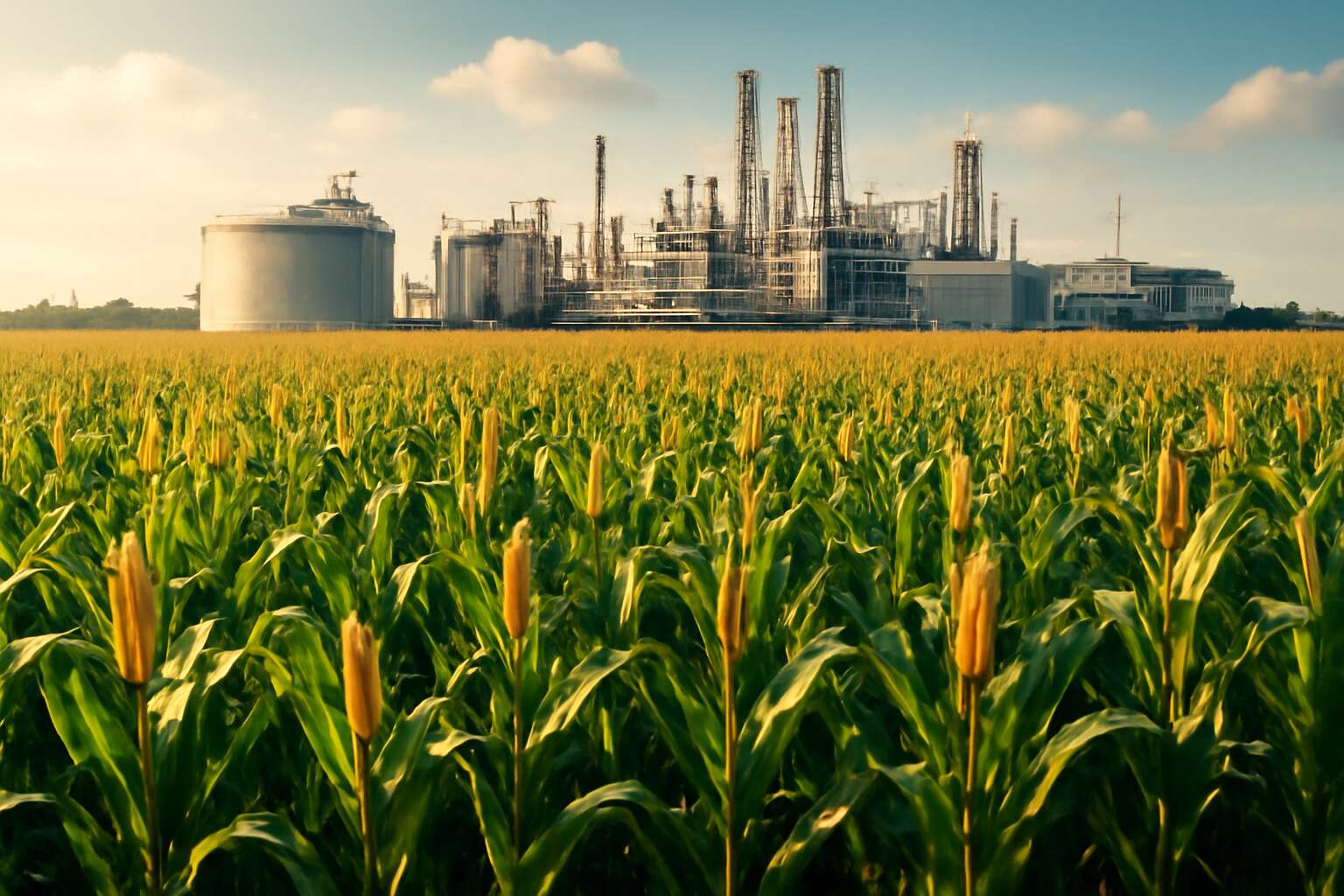
Biofuels and Global Agricultural Markets
Overview of Biofuel Feedstocks and Land Use
Global demand for biofuels has climbed steadily, nudging crop calendars and farm incomes. In this widening market, energy goals and harvest ambitions share the same soil, and land-use fairness grows louder. The balance between biofuels and food security remains a central question for planners.
Feedstocks span cane, maize, sorghum, soy, and palm oil, each with a different footprint on water, soil, and yield. Land-use decisions hinge on climate, irrigation, and market signals. Consider these factors as markets shift:
- Resource intensity and water footprint
- Competition with staple foods and land suitability
- Rural livelihoods and regional market links
In South Africa, feedstock choices shape farming incomes, price signals, and resilience to drought. Fields tell a story where policy and agronomy weave harvests into energy without starving the pantry. The relationship between biofuels and food security remains a dynamic chorus across the agricultural landscape.
Impact on Crop Prices and Farm Incomes
Global demand for biofuels has nudged crop prices upward by roughly 10% over the past five seasons, reshaping South African farm calendars and incomes. Markets now reflect energy goals and harvest realities, where policy mandates and feedstock mixes pull decisions in new directions!
- Global demand and policy signals
- Weather, yields and input costs
- Currency risk and market volatility
Across global markets, crop prices reach farmers through two channels: the price retailers pay and the cost of inputs that shape planting choices. In South Africa, maize, sorghum, and oilseeds stand at a climatic crossroads—bountiful yields one year, vulnerability the next—while biofuels and food security occupy lenders and policymakers alike.
Investors and farmers watch currency swings and trade signals as they calibrate risk and opportunity, shaping farm incomes in ways that ripple through rural towns. The dialogue between biofuels and food security remains a living chorus across South Africa’s agricultural landscape.
Policies and Incentives Shaping Supply
Policy signals are the quiet engines behind South Africa’s farm rows, turning weather whispers into planting choices. Globally, blending mandates and incentives push supply toward fuels that meet energy goals and protect households from price shocks.
- Blending mandates that set minimum shares of biofuels in transport fuels
- Infrastructure subsidies and tax incentives for processing, storage, and distribution
- Trade controls and sustainability criteria that shepherd feedstock quality
These levers ripple through crop calendars, input costs, and risk assessments, reframing what gets cultivated and when. In South Africa, the tension between policy direction and market signals sits at the heart of biofuels and food security.
Environmental Trade-offs: Emissions, Biodiversity, and Land Management
Emissions, biodiversity, and land stewardship braid together the story of how biofuels and food security unfold across continents. The push toward greener fuels tilts crop calendars and landscapes in a single breath, reshaping markets and soils alike. A climate economist sums it up with a crisp line: “Energy policy is land policy.” In South Africa, the question becomes how to balance energy ambition with resilience on the farm and in the pantry, while weather whispers and markets murmur in the same corridor.
Consider the environmental trade-offs to watch:
- Lifecycle emissions versus reductions measured in real-world operations
- Biodiversity and habitat integrity in farming regions
- Long-term soil health and sustainable land management
Global markets demand transparent accounting and robust safeguards that align energy advances with the protection of ecosystems and the nourishment of communities.
Biofuel Scale-Up and Food Access
Assessing Food Access in Biofuel-Driven Markets
“Scale up, or starve in the shadows,” a line whispered by South African farmers as biofuel plans move from policy pages to field plots. The message is clear: scale affects more than energy.
Biofuel Scale-Up hinges on policy certainty, smart financing, and shared infrastructure. New mills, storage hubs, and diversified feedstocks synchronize livelihoods with markets—yet the rhythm must stay in step with stable prices.
- Feedstock diversification
- Rural infrastructure mapping
- Transparent pricing signals
Food Access in Biofuel-Driven Markets requires safeguards that protect households while rewarding producers. In practice, price corridors and targeted support can cushion vulnerable communities without derailing rural progress. This intersection of biofuels and food security informs how communities perceive risk.
The balance between biofuels and food security remains a delicate, evolving curve in South Africa’s landscape.
Dietary Shifts and Nutrition in Agro-Economic Systems
In rural South Africa, the kitchen table is the loudspeaker of biofuel scale-up. When mills wake, families notice; when grain prices shift, meals shift too. The debate over biofuels grows louder, yet the real story is how agro-economies bend to energy and nourishment. biofuels and food security are braided, and every policy line travels to the pantry season after season.
Dietary shifts emerge as households adjust to price rhythms and harvests. Nutrition in agro-economic systems becomes a quiet project of safeguarding staples, diversifying diets, and keeping nutrients in abundance.
- Seasonal diversification protects nutrients
- Local storage reduces post-harvest loss
- Transparent markets sustain affordability
On the ground, I hear farmers speak not just of yield, but of breakfasts and school lunches—proof that scale must harmonize energy with meals. The road ahead is long, yet the lanes of care and resilience keep feeding both fields and families.
Safety Nets and Resilience for Vulnerable Populations
In rural South Africa, a price swing at the pump can tilt a breakfast table. Last year, 42% of households reported meals shifting with market tides. The conversation isn’t only about energy—it’s about how biofuels and food security braid their fates from the mill to the pantry.
Scale-up must lean on safety nets for the vulnerable. When energy policy lines up with nourishment, resilience becomes a practice, not a slogan.
- Cash transfers tied to harvest cycles to stabilize purchasing power
- School meals and feeding programs synchronized with crop years
- Strategic grain reserves and transparent price corridors to damp volatility
From townships to farms, these measures keep staples within reach even as the energy transition revs up. Resilience feeds both field and family.
Innovations in Biofuel Technology and Feedstock Diversification
Technologies and Feedstock Diversification
Across South Africa, the future of energy hinges on innovations that align power with plate. Last year, global investments in advanced biofuels climbed sharply, underscoring a shift where biofuels and food security can move in lockstep.
New tech elevates efficiency: cellulosic ethanol from crop residues, HEFA fuels from fats, and algae oils that sidestep arable land. These paths promise lower emissions and steadier food access, even as demand for transport energy grows.
Feedstock diversification technologies broaden the palette. Consider these pathways:
- Algae and aquatic plants as high-yield, land-light fuels
- Residues from crops and forestry as feedstock streams
- Drought-tolerant perennials and multi-cropping systems for year-round supply
In markets across the country, these innovations offer resilience and new economic roles for farmers.
Second-Generation Biofuels and Efficiency Gains
Flames of innovation are fueling a quiet revolution: last year, global investments in advanced biofuels jumped, signaling a new era where biofuels and food security walk in step. Cellulosic ethanol from crop residues, HEFA fuels from fats, and algae oils offer lower emissions—and less pressure on arable land for feeding a growing nation.
Feedstock diversification expands the palette. Consider these pathways:
- Algae and aquatic plants as high-yield, land-light fuels
- Residues from crops and forestry as feedstock streams
- Drought-tolerant perennials and multi-cropping systems for year-round supply
Across South Africa, these innovations offer resilience and new economic roles for farmers. Second-generation biofuels promise efficiency gains—more output from the same feedstock, steadier energy supply, and a gentler touch on land and harvests, keeping food and fuel rhythms in harmony.
Utilizing Crop Residues and Waste Streams
Global investments in advanced biofuels jumped 37% last year, signaling a shift where biofuels and food security walk in step. In South Africa, this momentum translates into biorefineries that convert crop residues and waste streams into fuels, stabilizing rural livelihoods while safeguarding energy security.
Advances in processing turn waste into value. Enzymatic pretreatment unlocks cellulose-rich feedstocks; catalytic upgrading refines fats into drop-in fuels; and algae-based systems promise high yields with modest land use. These innovations cut emissions and bolster supply resilience!
Key feedstock streams include:
- Crop and forestry residues as cellulose-rich feedstock
- Urban, agricultural and industrial waste streams
- Algae and aquatic biomass as high-yield, land-light options
Together, these pathways weave a resilient energy tapestry, supporting farmers, rural economies, and the shared goal of secure food and fuel.
Sustainability Metrics and Certification
An unexpected driver is reshaping fuel futures: global investments in advanced biofuels jumped 37% last year, proving that biofuels and food security are moving in the same direction. In this moment, the two aren’t at odds—they share a path to resilience and price stability.
Advances in processing turn waste into value in practical, almost poetic ways. In South Africa, labs are tuning enzyme blends and catalytic upgrades to squeeze more energy from residues and fats.
- Enzymatic pretreatment that unlocks cellulose-rich feedstocks
- Catalytic upgrading that refines fats into drop-in fuels
- Algae-based systems delivering high yields with modest land use
Sustainability metrics and certification play a crucial role, tracing lifecycle emissions, water use, and social safeguards. Standards like ISCC Plus and RSBA provide verifiable assurance, aligning farmer livelihoods with responsible supply chains and the broader aim of secure bioenergy futures.
Water Use, Soil Health, and Climate Risks
Global investments in advanced biofuels jumped 37% last year, a loud signal that biofuels and food security are moving in the same direction. In South Africa, researchers test turning waste streams into reliable energy while keeping staple crops affordable. The aim is resilience, not competition, a shift toward value from residues.
Innovations span modular biorefineries deployed where needed, precision fermentation unlocking non-food sugars, and catalytic upgrading squeezing more energy from fats. These advances emphasize water use and land stewardship, ensuring every drop and hectare is treated as a resource.
Feedstock diversification supports resilience with agricultural residues, non-food crops, and algae for steady supply as climates shift. The test is managing climate risks and soil health through better soil carbon, reduced erosion, and smarter reuse.
- Water-use efficiency and recycling in biorefineries
- Soil health monitoring and regenerative practices
- Climate risk mapping and adaptive planning
Policy, Trade, and Social Impacts
Policy Scenarios: Biofuels as a Complement or Competitor to Food Production
South Africa stands at a crossroads where policy, trade, and social equity collide in the biofuels and food security debate. A sharp quip from the corridors—“Energy security without food security is a house of cards”—cuts to the chase: can biofuels power cities without starving farms? The balance rests on credible forecasts and transparent trade-offs.
Policy scenarios: Biofuels as a complement or competitor to food production demand careful design. Consider these levers:
- Targeted subsidies that reward efficiency without inflating feedstock demand
- Trade rules that prevent price spikes during droughts
- Social protection nets for vulnerable households during transitions
Social impacts policy must address rural livelihoods, nutrition, and urban resilience. In the South African context, cooperation across departments and clear metrics can keep biofuels aligned with nutrition goals rather than pulling surpluses from the pantry. The right frame treats them as partners in an evolving energy and agriculture landscape.
Trade Implications and Global Food Security Assessments
South Africa stands at a policy crossroads where trade, social equity, and the energy ledger converge. Markets hum, power grids shimmer, and farmers measure risk in bushels and kilowatts. biofuels and food security should be imagined as a duet, not a duel, with forecasts that are credible and trade-offs that are transparent. A coruscating warning—”Energy security without food security is a house of cards”—reminds me that balance, not bravado, powers resilience!
- Transparent, data-driven price safeguards during droughts to prevent spikes
- Targeted subsidies that reward efficiency without inflating feedstock demand
- Social protection nets for vulnerable households during transitions
Global food security assessments remind us that cooperative governance and cross-border transparency are guardrails, ensuring biofuels act as a stabilizing current rather than a taffrail of price volatility.
Rural Development, Smallholder Inclusion, and Local Markets
South Africa’s energy transition sits at a policy crossroads. Sound policy links rural development with energy goals, ensuring farmers see fair prices and steady markets. The debate isn’t about scarcity but balance—biofuels and food security must align to protect households.
Trade rules should favor transparent cross-border flows and local procurement that strengthens smallholders, builds robust local markets, and cushions households from price swings!
Social protections and market access unlock rural development and smallholder inclusion.
- Mechanisms that connect farmer incomes to biofuel supply chains
- Cooperative ownership of processing facilities
- Transparent price dashboards for farmers
This orchestration helps keep South African communities resilient.
Investment, Finance, and Risk Management for Producers and Governments
South Africa’s energy transition has swung on a single, visceral statistic: last year, state and private funds pushed nearly R18-billion toward biofuels and food security, stitching farmers to markets and markets to households!
Policy must knit incentives that reward resilience, while trade rules favor transparent cross-border flows and local procurement that bolster smallholders.
- Policy coherence across agriculture, energy, and social protection
- Blended finance and credit guarantees for farmers and processors
- Transparent price dashboards and risk-sharing mechanisms
Investments and risk management frameworks should be designed for both producers and governments, with contingency reserves and insurance pools. Such orchestration cushions households from shocks and sustains competitive domestic markets, and in this light, policy, trade, and investment become a chorus around biofuels and food security that resonates through farms, mills, and townships.
Public Perception, Communication, and Social License
R18-billion steered into biofuels and food security in South Africa last year shows policy can pivot fast when stakeholders share a view of the future. We need coherent incentives, trade rules that reward resilience, and local procurement that keeps smallholders in the loop. When messages align with reality, confidence follows!
- Clear, verifiable dashboards on prices, volumes, and household impact
- Inclusive town-hall forums that bring rural voices to policy tables
- Consistent, jargon-free messaging across media to prevent misinformation
- Tangible benefits for smallholders wired into local markets and procurement
Public perception is stewardship. When people understand how policy links farms to households, the social license grows and markets function more smoothly. Transparent trade rules support affordable food and reliable feedstock for biofuels and food security alike.
Regional Case Studies and Lessons Learned
Across South Africa’s regions, policy pivots paired with regional case studies illuminate how policy, trade, and social outcomes intertwine. When districts in the Free State, KwaZulu-Natal, and the Eastern Cape report price stability alongside farmer incomes, the idea of biofuels and food security gains credibility. These stories show that transparent data and local voices can align markets with households, even in drought-prone seasons.
Lessons learned point to three realities: regional coherence in trade rules, real procurement pipelines that reach smallholders, and community-led monitoring that keeps trust alive.
- Trade rules designed for resilience with regional contingency stocks
- Local procurement through farmer co-ops linking markets to fields
- Open dashboards and rural forums that translate policy into practical impact
The arc of policy, trade, and social impact in South Africa’s biofuel landscape proves that when regionally grounded, the benefits flow to households and farms alike, strengthening biofuels and food security.

0 Comments