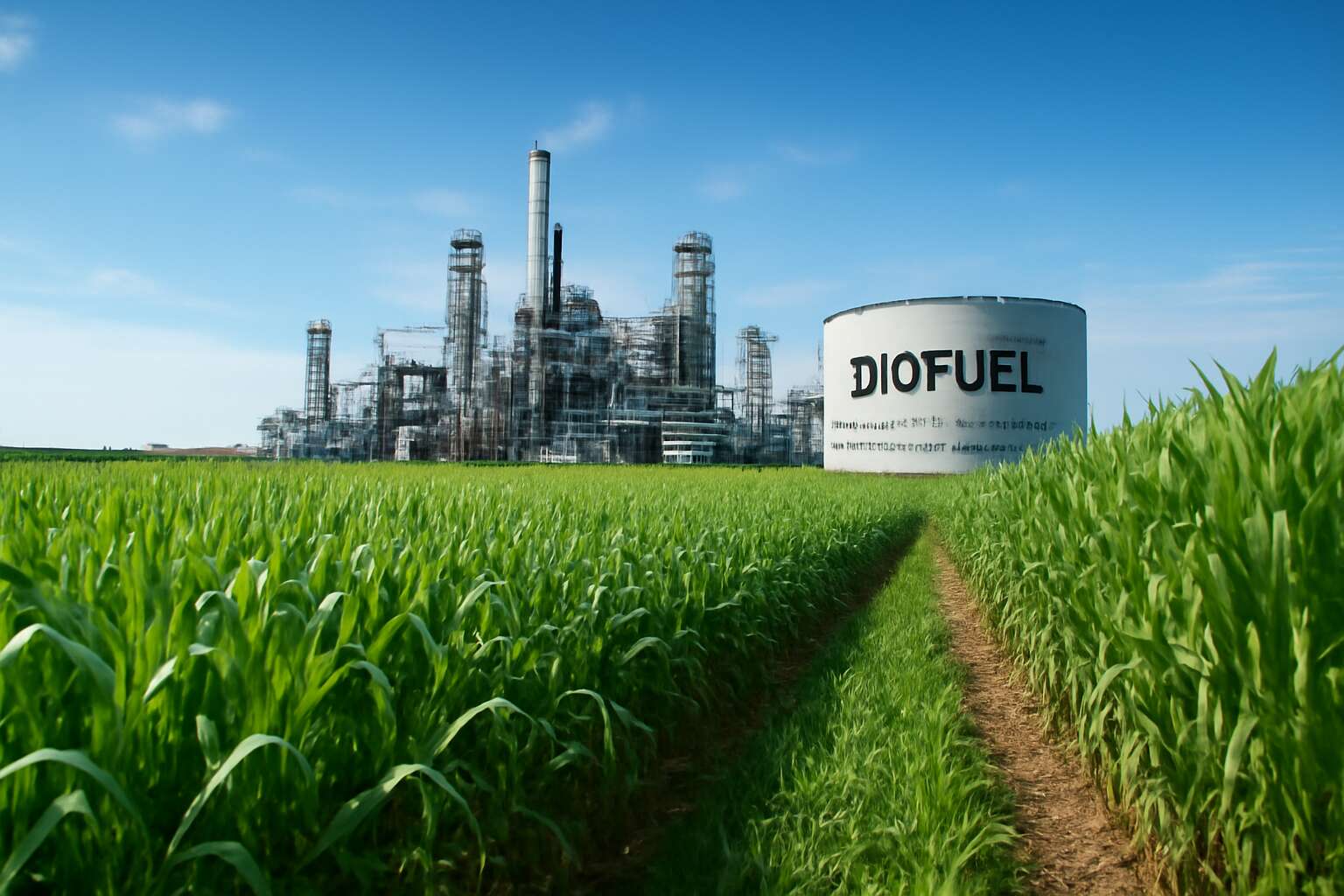
Overview of Biofuels vs Fossil Fuels
What Are Biofuels and Fossil Fuels
South Africa’s energy path is a tightrope walk: transport fuels still power the economy, but cleaner options are elbowing their way into the lane. “Biofuels are not a magic wand—just a practical bridge,” says an energy analyst, and that punchline lands when the cost curves start bending toward renewables while grids stay stable.
Biofuels come from contemporary biomass—plants, waste and residues—where fossil fuels are ancient hydrocarbons formed over millennia. They offer renewable feedstocks like sugarcane, sunflower oil, and algae, with different well-to-wheel profiles. The big question remains: can biofuels replace fossil fuels at scale in South Africa’s energy mix?
- Feedstock sustainability and land-use considerations
- Lifecycle emissions versus energy balance
- Scale, cost, and infrastructure compatibility
Current Market Share and Trends
“Biofuels are not a magic wand—just a practical bridge,” an energy analyst says, as South Africa’s transport sector remains the engine of the economy while cleaner options inch into the lane. The current market feels less like a pivot and more like a patient migration, with refineries quietly retooling to accommodate renewables.
The lingering question remains: can biofuels replace fossil fuels in SA’s energy mix? Growth hinges on feedstock cost discipline, lifecycle emissions, and the ability of our grids to soak up variability while engines sip cleaner blends.
- Policy mandates and blending targets
- Cross-border feedstock supply and logistics
- Investment in conversion capacity and distribution
From biodiesel in coastal refineries to ethanol blends in inland corridors, the trends hint at gradual, not dramatic, shifts—and the narrative keeps changing with every policy nudge.
Energy Density and Performance
In SA, the energy stage hums with a quiet resilience. “The future is a blend, not a swap,” an analyst notes, and the road ahead unfurls in measured steps. The question remains: can biofuels replace fossil fuels. This line threads through policy briefings and refinery chatter, a lyrical note in a pragmatic symphony.
Biofuels tighten the story differently by density and performance. Biodiesel keeps pace with diesel on energy content; ethanol trails gasoline in volume energy, and blends shift both range and response. Engine compatibility and cold-weather behavior shape how smoothly a transition could occur on South Africa’s diverse terrains.
- Energy density and how blends perform in real-world engines
- Fleet diversity and maintenance implications
- Infrastructure for storage, distribution, and supply chains
As corridors evolve and grids absorb variability, the narrative continues to mutate with every policy nudge.
Key Environmental and Economic Considerations
South Africa stands at an energy crossroads where every litre matters. A 2023 briefing hints that well-managed biofuel blends could curb transport emissions while boosting rural livelihoods. Can biofuels replace fossil fuels? The answer isn’t binary—it’s a spectrum of tech, feedstocks, and policy nudges shaping the road ahead.
Environmental considerations hinge on feedstock choices and processing efficiency. Lifecycle emissions improve when waste streams are used, yet land use, water stress, and biodiversity risks must be managed. In SA, feedstock diversity and regional resilience matter for sustainable outcomes.
Economically, biofuels can fortify rural value chains and reduce import exposure, but capital costs and policy certainty matter. Three levers shape viability:
- Environmental performance and emissions controls
- Supply chain resilience and regional job creation
- Policy clarity and investment risk
Technical Feasibility and Production Pathways
First-Generation vs Second-Generation Biofuels
South Africa’s transport sector accounts for roughly 14% of national emissions, a figure that demands practical energy pivots. Technical feasibility hinges on three levers: feedstock availability, refinery compatibility, and logistics networks. First-generation biofuels lean on edible or high-yield crops, while Second-generation tap into residues and dedicated energy crops—diminishing food-versus-fuel tensions. This balance shapes what can be scaled today and what must wait for better processing capabilities!
- Feedstock supply chains and regional availability
- Conversion technology maturity and cost
- Distribution, blending rules, and engine compatibility
On production pathways, First-Generation uses sugar and oil crops; Second-Generation relies on cellulosic feedstocks and waste streams. The former is nearer to market but faces land-use pressures; the latter promises bigger environmental gains yet demands more advanced processing and policy support. This raises the question: can biofuels replace fossil fuels? In South Africa, pilots explore blends in road diesel and aviation, testing the scale ahead.
Feedstock Availability and Agricultural Impacts
South Africa’s bright fields and shifting logistics hint at a quiet revolution. Technical feasibility rests on three levers—feedstock availability, refinery compatibility, and the shape of distribution networks. In practice, this means mapping regional crops, testing refinery blends, and forging routes that move feedstocks from farm to fuel without friction. The scale leans toward residues and purpose-grown crops, aligned with local farming rhythms and rural livelihoods.
- Regional feedstock availability across provinces and seasons
- Agricultural impacts: land use and water demand
Production pathways reveal a balance of immediacy and impact. can biofuels replace fossil fuels remains a spectrum, shaped by policy, investment, and regional cooperation. In South Africa, pilots test blends in road diesel and aviation, hinting at a measured ascent.
Advancements in Conversion Technologies
Bold rotations of field and refinery begin with three levers—feedstock availability, refinery compatibility, and distribution pathways—mapping a quiet revolution across South Africa. A tonne of agricultural residue could yield meaningful litres of fuel, stitching farming rhythms to urban pumps. The question can biofuels replace fossil fuels is being explored on test benches and in pilot blends for road diesel and aviation fuel, a measured ascent rather than a leap. This work hinges on aligning regional crops with upgrading processes and threading frictionless routes from field to fuel.
Advancements in conversion technologies tilt the balance toward immediacy and impact. Biochemical fermentation, gasification, and hydrothermal upgrading expand the toolbox, opening residues and purpose-grown crops to scalable production. The latest platforms emphasize modular refiners, cleaner energy inputs, and lifecycle considerations that keep water use and emissions in check as pilots scale.
Economic and Policy Drivers
Cost Competitiveness and Subsidies
Every year, South Africa spends billions on imported fuels, a drain that touches commuters and business alike. The frontline question is urgent and direct: can biofuels replace fossil fuels in a practical, scalable way for our energy system?
Economic and policy drivers shape this landscape. Cost competitiveness depends on feedstock price, yield, and the capital cost of conversion plants. Subsidies and stable blending mandates can smooth the investment cycle, and we believe they bring biofuels closer to parity with conventional fuels.
Policy levers include:
- Subsidies for local production and refinery integration
- Blending mandates and tax incentives for farmers and processors
In South Africa, success will hinge on policy certainty, supply chains, and shared infrastructure that lessen the pull of imported crude while keeping prices predictable for industry and consumers.
Carbon Pricing and Emissions Regulations
Policy signals act like northern lights over the South African energy plains, guiding investment toward fuel choices that endure. Carbon pricing schemes and emissions regulations are not mere rules—they are engines that reshape demand, price signals, and project risk, turning long-term planning into navigable routes. In this climate, investors listen for policy certainty as eagerly as a captain reads the weather.
Consider these levers shaping the economics:
- Strong carbon pricing and market mechanisms that reward low-carbon fuels
- Lifecycle emissions regulations that level the playing field
- Stable blending mandates and refined fuel standards to anchor demand
The policy landscape also touches finance, infrastructure, and regional trade, nudging capital toward domestic production and refinery integration within South Africa’s energy corridor. The enduring question—can biofuels replace fossil fuels—rests on how relentlessly certainty is pursued and how swiftly supply chains mature in a shared infrastructure web.
Supply Chain Resilience and Regional Variability
Policy signals ripple through every megajoule, bending the shadow lines of South Africa’s energy plains. The central question remains: can biofuels replace fossil fuels? The question isn’t merely technical; it’s a test of finance, infrastructure, and the trust markets place in a predictable future. I’ve watched policy signals tilt the scales in moments.
Economic and policy drivers create the conditions for investment to flow into domestic biofuel ecosystems. Strong carbon pricing, lifecycle emissions standards, and stable blending mandates align profitability with low-carbon outcomes. The central question remains: can biofuels replace fossil fuels? The outcome hinges on three levers:
- Policy certainty that reduces project risk
- Financing instruments tailored to long horizons
- Strategic refinery integration and regional trade
Supply chains must withstand shocks, from weather risk to port congestion, and regional variability matters as SA goods move through a Southern African energy corridor. A resilient system can bend toward energy independence, yet the path asks for collaboration, capital, and patience.
Lifecycle Emissions and Sustainability Criteria
Policy signals move faster than engines. In South Africa, certainty is the weather that tilts the ledger toward or away from green fuels. The question—can biofuels replace fossil fuels—looms over boardrooms and farms alike, a chiaroscuro of risk and hope; I’ve watched policy pulses tilt scales in moments.
Lifecycle emissions and sustainability criteria anchor the debate. Truth-telling accounting—over everything from fertilizer footprints to soil health—keeps profits honest and projects credible. In this realm, supply chain transparency and robust certification become as vital as capital.
- transparent lifecycle assessments
- land-use, water, and biodiversity safeguards
- social impact and local community engagement
Incentives for Scaling Production
Policy signals move faster than engines, and in South Africa that velocity tilts investment toward or away from green fuels. The question can biofuels replace fossil fuels sits in boardrooms, nudging capex decisions, energy security plans, and rural development bets—almost as if an unseen market spirit is whispering in the numbers. Economic incentives—tax breaks, loan guarantees, and procurement rules—are the wind that lifts projects from drawing boards to production floors.
- Targeted tax credits and accelerated depreciation for bio-refineries
- Guaranteed off-take and public procurement mandates for biofuel blends
- Infrastructure funding for storage, distribution, and feedstock logistics
When policy alignment fuses finance with feedstock certainty, the scaling narrative gains velocity and credibility.
Environmental and Social Implications
Land Use, Biodiversity, and Water Resources
In South Africa’s wind-washed plains and urban hum, the future of energy hums with a question: can biofuels replace fossil fuels without draining life from land and water? I hear the chorus of trade-offs, where climate commitments clash with local realities, and policy must listen as keenly as engineers!
Land use, biodiversity, and water resources are the quiet pillars that hold this promise upright. If crops expand without care, landscapes shift, habitats shrink, and communities bear the cost.
- Land-use efficiency and habitat protection
- Biodiversity safeguards and ecosystem resilience
- Water footprint management and irrigation efficiency
Second-generation pathways, waste or non-edible feedstocks, and smarter irrigation can soften the margins where soil speaks and rivers murmur. In this balance, the question remains whether a move to second-generation pathways can truly bend the arc without compromising water security and people.
Air Quality and Emissions Impacts
Air is the currency of progress, and in South Africa’s cities and farms, dirty air costs more than oil. The question ‘can biofuels replace fossil fuels’ sits at the crossroads of cleaner air and rural livelihoods, where engine performance meets health outcomes. Clean alternatives can cut soot and particulates when blended smartly, but emissions shadows remain, depending on feedstock and refining!
In practice, air quality depends on production and local context. Reduced particulate matter from cleaner combustion can improve urban health, yet mismanaged production or high NOx from some blends may offset gains.
- Urban air quality improvements with cleaner combustion and lower soot
- NOx emissions trade-offs that vary with blend and engine technology
- Industrial process emissions and energy demand for production and distribution
The wind itself seems to whisper: adapt, optimize, and listen as policy, industry, and communities choreograph a careful dance between energy and environment.
Rural Development and Jobs
Rural communities in South Africa wake to a new sunrise: farmers turning harvests into fuel and jobs into opportunity. I’ve seen smallholders partner with local mills, turning crop residues into power and pride, one cooperative gathering at a time.
The question can biofuels replace fossil fuels isn’t just about engines; it’s about livelihoods, price stability, and community resilience. When feedstock flows stay local and transparent, families gain steady income and schools benefit from nearby energy projects.
- Local job creation across farming, collection, processing, and logistics
- Skills development and community ownership of energy assets
Across SA’s landscapes, social gains hinge on fair land use, training pipelines, and inclusive decision-making. The wind whispers: invest wisely, protect workers, and honor the land that feeds the feedstock!
Food Security and Competition for Resources
Food on the table and fuel in the tank are two sides of the same coin, and South Africa’s rural heart keeps beating even as fields compete for water and sunlight. The environmental and social implications ripple through households, schools, and local markets, shaping tomorrow’s resilience.
Can biofuels replace fossil fuels? The question is not merely about engines; it shadows livelihoods and price stability. When feedstock stays local and contracts are transparent, families gain steadier incomes and communities build energy pride—yet competition for resources can press food prices if voices stay unheard.
- Food security becomes the real measure of an energy initiative’s success.
- Local ownership and fair pricing strengthen household resilience against shocks.
- Inclusive governance keeps communities at the table and ensures durable benefits.

0 Comments