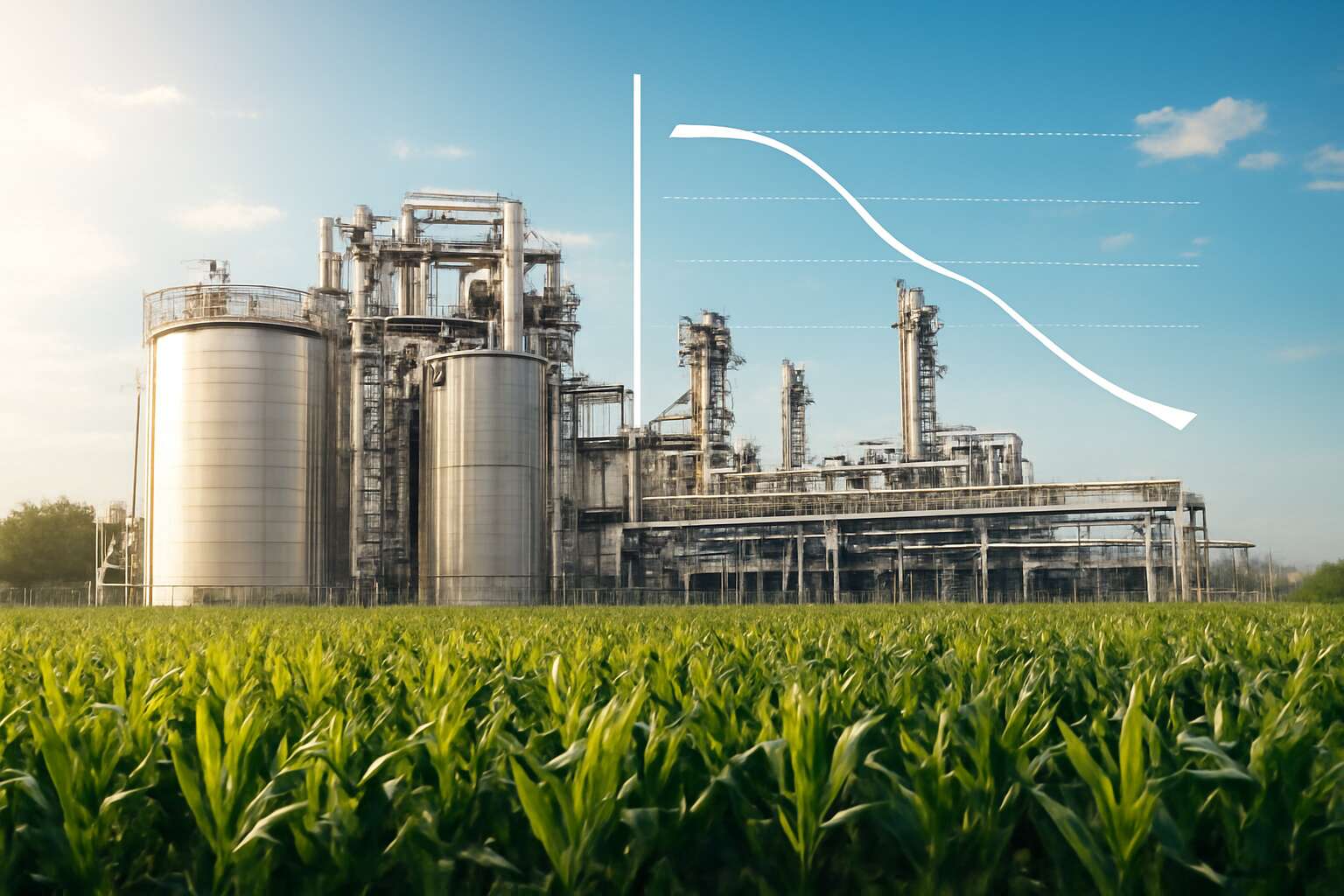
Overview of the Cost Landscape for Biofuels
Historical trends in biofuel pricing
In South Africa, the biofuels cost can swing faster than a cape wind gust—double-digit shifts are not unusual when crude oil moves or the rand wobbles. This cost landscape grabs headlines and budgets alike: volatile, interconnected, and stubbornly real. As one energy analyst quips, volatility is the new normal.
The cost landscape is a patchwork—feedstock prices, processing tech, policy settings, and logistics all tug on the number. Main levers include:
- Feedstock price and availability (sugarcane, maize, used cooking oil)
- Policy incentives, mandates, and import duties
- Logistics, currency risk, and processing efficiency
Historically, biofuel pricing follows commodity cycles and policy moods. In the 2010s, incentives softened prices while shocks—drought, oil spikes, or currency moves—pushed them higher. In South Africa, shifts in incentives and local feedstock supply imprint pricing trends without dulling the ongoing adaptation story.
Comparing production costs across biodiesel and bioethanol
In South Africa, the biofuels cost landscape reads like a living map—price springs from sugarcane, maize, or used cooking oil, then twists through refinery gear and policy gales. Biodiesel and bioethanol chase different promises: one leans on oils and fats, the other on fermentable sugars, yet both ride the same weather of volatility and opportunity!
- Feedstock price and availability (sugarcane, maize, used cooking oil)
- Processing technology efficiency and capital costs
- Policy incentives, mandates, and import duties
- Logistics, currency risk, and scale of refining
Across the aisle, biodiesel fights on the oils frontier while bioethanol contends with sugar conversion efficiency. In this theatre, local feedstock cycles, credit conditions, and refinery uptime are the quiet kings shaping margins—always in motion, always connective to the rand and global crude.
Key drivers of feedstock prices
Volatility in feedstock prices keeps the biofuels cost on a knife-edge. In South Africa, double-digit swings in annual costs are common, shaping margins for biodiesel and bioethanol alike. Sugarcane, maize, and used cooking oil sit at the root of the curve, their availability steering refinery runs.
- Sugarcane price and harvest cycles
- Maize crop yields and ethanol potential
- Used cooking oil supply from urban networks
Processing technology efficiency and capital costs set the ceiling and floor. Plant uptime, conversion yield, and energy use determine cost per litre regardless of feedstock. Policy incentives, mandates, and import duties tilt margins, while logistics and currency risk add hidden charges. Scale matters: larger refineries smooth rand swings and improve negotiating power!
Local supply chains and refinery throughput act as quiet kings, coordinating with feedstock availability and macro trends to shape margins. The cost landscape in South Africa remains dynamic, responding to harvest seasons, policy signals, and global price moves—the weather that drives every refinery decision.
Impact of policy on biofuel costs
Policy acts like weather over South Africa’s veld, shaping the biofuels cost that touches every farm gate and refinery. A small tariff tweak or blending requirement can tilt margins for an entire season, and rural workshops adjust hours to ride the curve. The message is clear: rules, markets, and rand shifts set the stage for price risk!
- Tariffs and import duties that raise upfront feedstock and equipment costs
- Blending mandates and fuel specification standards that push processing requirements
- Subsidies, tax incentives, and carbon pricing that tip margins toward stability or volatility
Ultimately, policy signals ripple through logistics, currency moves, and local supply chains, shaping the real cost from field to pump.
Feedstock Economics and Input Costs
Agricultural feedstock price volatility
In South Africa, a drought-scarred season or a bumper maize harvest can tilt the feedstock equation faster than a lightning strike. I’ve watched the biofuels cost bounce when a single weather blip hits, pulling margins with it. Feedstock economics aren’t only about crop price; they hinge on storage, timing, and a global market that never sleeps.
- Domestic harvest variability
- Weather shocks and pest pressures
- Exchange rate and import parity
- Storage and logistics costs
- Policy signals and subsidy timing
These forces collide in ways that magnify price swings for agricultural feedstocks used in South Africa biofuels. The gearset of input costs—fertilizers, seeds, and energy—often pushes the biofuels cost higher, sometimes eclipsing the crop price itself. Every harvest becomes a calculation in a national energy puzzle.
Land use and yield efficiency
Feedstock economics hinge on land use and yield efficiency, alongside the stubborn costs of inputs—fertilizers, seeds, and energy. In South Africa, a drought or bumper maize harvest can tilt the balance faster than a lightning strike—reshaping the biofuels cost landscape! Storage and timing add hidden taxes, and a global market that never sleeps amplifies volatility. Each hectare becomes a quiet engine, turning soil and weather into margins and turning harvests into a national energy puzzle.
- Land use and yield efficiency: soil health, irrigation efficiency, crop rotation
- Storage and logistics: reducing losses from field to refinery
- Policy timing and contract structures: procurement cycles shaping input costs
These forces echo in every price curve and in refinery planning.
Energy inputs and processing requirements
Harvests rise and fall with moisture, markets, and microclimates. In South Africa, a drought can flip feedstock margins faster than a thunderbolt, rewriting the arithmetic of margins. Farmers, mills, and refineries read soil moisture like a weather report—each season a new margin story.
Feedstock economics hinge on energy inputs and processing demands—irrigation pumps, drying heat, milling, and distillation. Every kilowatt and liter of water chips away at margins, and price swings in the grid and logistics magnify the effect. biofuels cost becomes a shifting landscape, never a single price tag.
- Energy intensity of drying and milling
- Input volatility from fertilizers and seeds
- Storage losses and transport costs
These threads weave the real price signal from field to refinery, shaping decisions for growers, traders, and policymakers alike.
Regional variations in feedstock costs
Rain writes the price with its own ink. In South Africa, a drought can tilt margins in days, spinning a fresh price narrative for every acre and tonne milled. Feedstock economics move from field to refinery, faster than most expect.
Regional variations in feedstock costs reflect climate, water access, and logistics. I watch farmers dial into maize in the interior, while coastal routes move cane and other crops with different supply rhythms, lifting transport bills. These signals shape the biofuels cost equation and margins alike.
- Mpumalanga and Limpopo: maize-based feedstock with price swings tied to rainfall
- KwaZulu-Natal and Eastern Cape: sugarcane blends and higher freight shares
- Western Cape: canola or sunflower with storage and pest pressures
From field to refinery, every inch of moisture becomes part of the price signal for biofuels cost—a living ledger that rarely rests.
Sustainability measures and cost implications
In South Africa, a drought can tilt margins in days, turning field moisture into a living ledger of biofuels cost. From the farmer’s furrow to the refinery’s backroom, every tick of rainfall or drought rearranges price signals and margins with elegant brutality.
To anchor volatility, sustainability measures earn their keep and shape the cost picture:
- Water-smart irrigation and rainwater harvesting to reduce water risk
- Residue capture and on-site valorisation to boost yields without extra land
- Energy-efficient milling and waste-to-energy integration to cut processing costs
These steps translate into cost implications: resilience against weather swings, steadier long-term contracts, and a more predictable margin canvas for investors and processors alike.
Production Technologies and Efficiency
Fermentation and enzymatic processes cost drivers
In the quiet engines of biofuel plants, fermentation reveals its double nature—cheap sweetness, costly patience. I’ve watched fermentation and enzymatic steps shape the price tag like a shadow upon steel: quicker yields, yes, but expensive enzymes, precise temperatures, and tight uptime demands. Across South Africa, plants chase efficiency while grappling with capital heft and maintenance intricacies.
Two engines of change meet at the mash tun and the bioreactor: fermentation efficiency and enzymatic process costs. The drivers include enzyme loading, reaction time, and the need for pristine conditions. For South Africa, local scale and reliability bite into the bottom line, turning science into commerce.
- Enzyme costs and turnover rates
- Fermentation vessel uptime and cleaning cycles
- Process integration with waste valorization
Ultimately, the balance of yields and energy input shapes biofuels cost, with a few innovations promising relief—yet each advance wears its own price in capital, maintenance, and risk.
Transesterification and refining costs
Production technologies in the biofuels arena—transesterification and subsequent refining—set the cost thermostat for South Africa’s liquid energy mix. Transesterification converts fats and oils into biodiesel with moderate heat and a dash of catalyst; performance hinges on methanol recovery, catalyst turnover, and clean-water management. Refining tightens specs, removing glycerol and impurities, which protects engines and warranties—at a price, and with a sly cat-and-mouse between efficiency and capital expenditure, shaping the biofuels cost in SA.
Key levers in efficiency and cost include reaction conditions, feedstock quality, and energy integration. The following factors sway the price tag more than showroom gloss:
- Catalyst choice and loading, with recovery cycles
- Methanol capture efficiency and glycerin management
- Purification energy demand and water minimization
Together, these steps anchor South Africa’s cost landscape amid policy shifts and regional supply realities.
Scale economies and capital expenditure
SA’s bioeconomy hinges on how efficiently a plant can turn feedstock into energy without draining rural pockets. Across SA, efficient plants can cut energy costs by up to 15% when run in modular modes. Production technologies and their clever integration with heat, power, and water shape the bottom line. When plants run in steady, modular modes—think co-ops and regional mills—the capital outlay spreads, and the biofuels cost becomes a more predictable companion for farmers and local businesses.
Scale economies bloom from continuous processing, shared utilities, and disciplined maintenance. A small uptick in plant utilization can shave unit costs and steady livelihoods. Capital expenditure choices—whether to expand now or wait—set the pace for SA’s longer-term biofuels cost and energy resilience.
- Modular, scalable design that aligns with regional feedstock flows
- Energy integration and water minimization to cut processing input
- Strategic co-location with logistics hubs to share infrastructure
Waste-to-energy and co-processing options
In the quiet of SA’s refining yards, waste becomes power and power becomes certainty. A modular plant coaxes richer yields from the same feedstock by reclaiming heat and recycling streams, tempering the biofuels cost that weighs on rural pockets and town budgets alike, and embracing intelligent co-processing.
- Anaerobic digestion yields biogas for on-site power and digestate fertilizer
- Gasification converts troublesome feedstock into syngas for fuels or chemicals
- Pyrolysis produces bio-oil that slots into existing refineries or kilns
In the crucible of production, these waste-to-energy and co-processing pathways whisper efficiency into every step.
In South Africa, aligning these technologies with regional logistics, water minimization, and shared utilities can turn variability into resilience, shaping a steadier horizon for the industry and rural livelihoods.
Market Dynamics and Policy Impacts
Subsidies, tariffs, and incentives
In South Africa, the pulse of industry beats with policy, and the “biofuels cost” answers to every policy gust. A policy analyst once said, “Policy is the wind, the market the sail,” and that metaphor rings true as subsidies, tariffs, and incentives tilt prices across refineries and retailers!
Market dynamics here ride on government support and cross-border trade. To visualize, consider these policy levers that directly influence biofuels cost:
- Subsidies that cushion feedstock or processing expenses
- Tariffs that shield domestic biofuel blends
- Incentives encouraging scale and investment in refineries
When these levers shift, capital plans bend and project economics change, making biofuels cost a moving target rather than a fixed price tag.
Carbon pricing and lifecycle cost accounting
In South Africa, carbon pricing nudged the energy mix and farm budgets—last year it shifted the economics of biofuels cost by a noticeable margin. Policy is the wind, the market the sail, and that truth lands where the harvest meets the refinery floor. The ripple touches blending and storage, turning a fixed price tag into a moving target, and I’ve seen that wind redraw farmer budgets!
Policy levers set the rhythm for investors and rural processors alike. Consider these elements shaping the refinery ledger:
- Carbon pricing and lifecycle cost accounting shaping returns
- Domestic protection and trade rules influencing throughput
- Sustainability metrics guiding capex timing and security
When these levers shift, plans bend and project economics change.
In the South African countryside, policy price signals echo through cooperative yards and harvests, guiding trust between growers and refiners.
Oil price linkage and substitute effects
Markets in the South African heartland hum like a hearth-fire, where oil price linkage tightens the tether between feedstock costs and refinery receipts. Substitute options—biodiesel’s crude cousins and renewable blends—nudge the price of biofuels cost into new weather. The harvest season becomes a balance beam between volatility and value, and budgets feel the draft!
Three forces steer the line of sight for investors:
- Oil price swings echo through farm-to-refinery margins
- Substitute feedstocks alter relative value
- Policy signals reshape hedging and risk appetite
In the SA landscape, policy signals and global price lanes meet on dusty roads where farmers and refiners negotiate futures and storage. The net effect is a shifting rhythm: price expectations adjust, timing of capex tightens, and regional volatility prints itself on the ledger.
Regulatory hurdles and incentives in different regions
A single season can swing biofuels cost by double digits in South Africa, a pulse that keeps farmers and refiners awake at dawn. I watch hulls of feedstock futures dance with harvest weather, and the clockwork of margins shifts in whispering degrees. The story is rarely one note—it’s a chorus of logistics, currency, and policy, all bending the price-ladder we call biofuels cost.
Market dynamics thread farm-gate signals to refinery receipts as feedstock quality, transport, and milling capacity tilt margins. I’ve sat in railyards and watch contracts drift with the wind, a reminder that timing and risk are inseparable companions.
- Regulatory hurdles and incentives across regions
- Tariffs, credits, and renewable mandates
- Regional pricing signals and storage costs
Policy signals reshape hedging and risk appetite; in some corridors, subsidies soften the blow of volatility, while carbon pricing sharpens the blade on biofuels cost accounting.
Trade flows and import dependency
In South Africa’s refining corridor, a single month can tilt biofuels cost by double digits, turning a forecast into a weather report you hear in the margins. Buyers watch rand swings, import licenses, and ship schedules as weather fronts—each gust reshaping the cost of blending, storage, and distribution. The drama is a social ledger of logistics, risk, and opportunity.
Market dynamics choreograph trade flows and heighten import dependency, with every port move echoing through the price ladder.
- Port congestion and velocity of shipments
- Local feedstock harvest timing vs. refinery intake
- Currency movements and bilateral pricing agreements
Policy signals sharpen hedging instincts as buyers weigh supply risk against subsidies and carbon pricing, nudging risk appetite toward longer contracts. In this calculus, the visibility of biofuels cost stays top of mind for auditors and lenders alike.



0 Comments