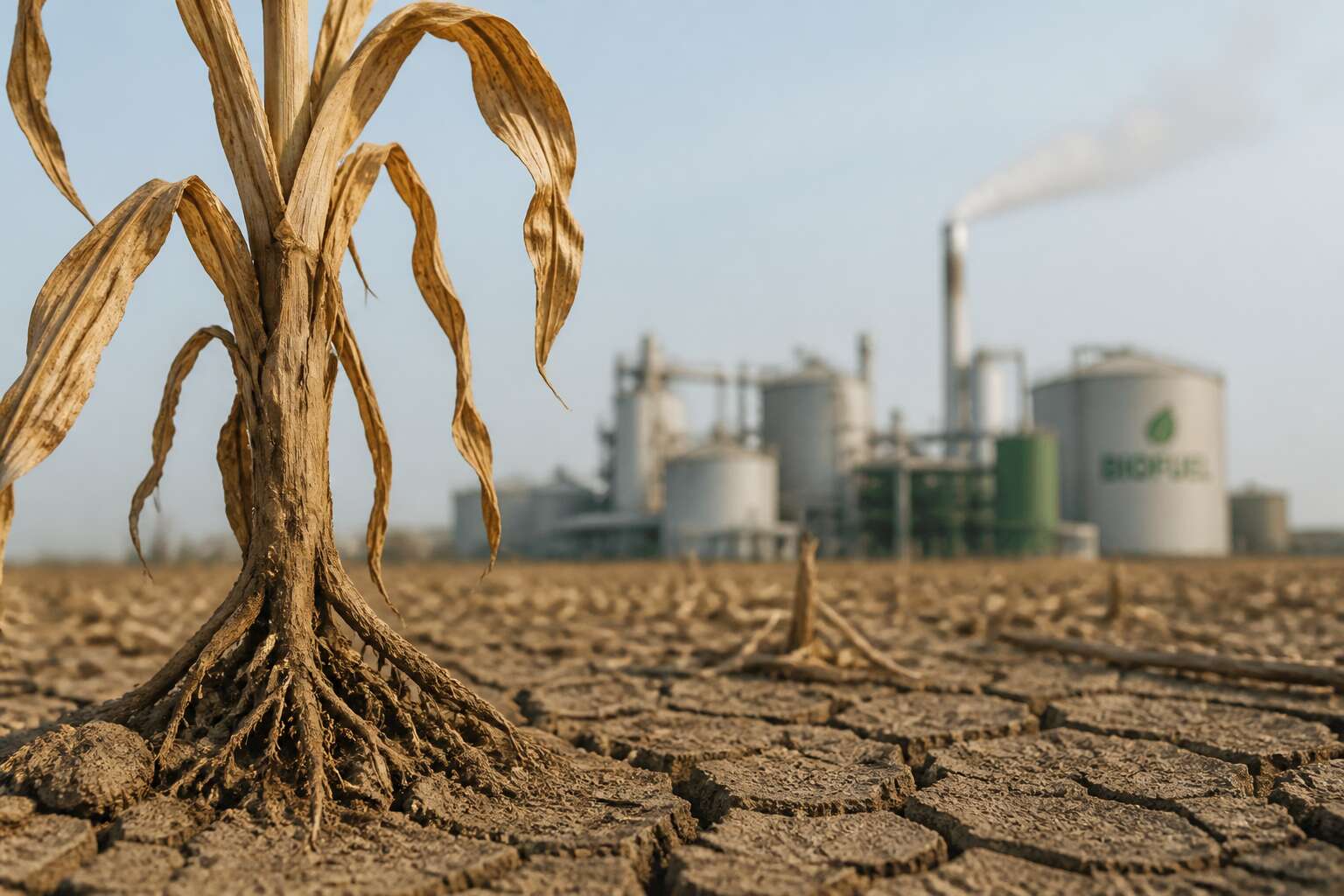
Environmental Concerns
Land Use and Deforestation
South Africa loses thousands of hectares of indigenous woodland each year for biofuel production. This land use shift is one of the most severe biofuels drawbacks. Converting natural veld into energy crop plantations fractures ecosystems that have evolved over millennia.
- Cleared land becomes vulnerable to invasive species
- Native pollinators lose their habitats
- Erosion accelerates on exposed slopes
The soil degrades as well. Oilseed crops drain moisture and nutrients, leaving the ground hard and unproductive. In dry provinces like the Northern Cape, biofuel farming can reduce groundwater recharge by up to 20%. Deforestation also complicates carbon accounting; burning cleared vegetation releases stored carbon, while the new crop takes decades to recapture it.
Water Consumption and Pollution
Water demands for biofuel crops in South Africa cut deep into a nation already classified as water stressed. One litre of certain biofuel blends can require more than 2,000 litres of irrigation water. In the Mpumalanga highveld, where many processing plants operate, this competition strains municipal supply and agricultural needs simultaneously. The thirsty nature of these energy crops represents a fundamental drawback for a country facing periodic drought.
Pollution follows the pipeline. Fertiliser runoff from sugarcane and maize fields flows into river systems like the Vaal and Olifants, carrying nitrogen and phosphorus that trigger algal blooms. These blooms choke aquatic life and require costly treatment before water is safe for human consumption. Chemical pesticides compound the issue, lingering in sediments for years. The processing stage adds another layer of contamination. Effluent from biofuel refineries often contains high biological oxygen demand, meaning it strips oxygen from waterways as it decomposes. This can suffocate fish populations downstream. Each of these pathways stresses water systems that already labour under heavy use, creating hidden costs often ignored in enthusiasm for green fuels.
Biodiversity Loss
South Africa harbours three global biodiversity hotspots, yet biofuel expansion is steadily degrading the ecosystems that define them. The Highveld grasslands, once home to diverse bird and insect life, become uniform green rows under cane and maize cultivation. When indigenous veld disappears, ground-nesting birds lose their breeding habitat. This biodiversity loss ranks among the most overlooked biofuels drawbacks in the country.
Herbicide drift kills flowering plants that endemic pollinators, like the long-tongued fly in the fynbos, depend on. Fragmentation creates a second crisis:
- Wildlife corridors are severed
- Isolated populations face reduced genetic diversity
- Predator-prey dynamics destabilise
For rural communities relying on wild resources, these losses carry tangible costs. I have seen the silence that follows when a grassland becomes a plantation. The damage extends beyond the visible fields into surrounding ecosystems.
Greenhouse Gas Emissions from Production
Here is a startling number: producing one litre of bioethanol can release as much carbon as burning three litres of petrol, once you count the full supply chain. In South Africa, that chain begins with diesel-hungry tractors and ends with energy-intensive distillation plants. The crop itself also contributes. Nitrogen fertilisers, applied liberally across Mpumalanga cane fields, decompose into nitrous oxide, a greenhouse gas nearly 300 times more potent than carbon dioxide.
This creates a perverse loop. Farmers clear land for feedstock, till the soil, and pump groundwater, all to manufacture a fuel that supposedly fights climate change. The emissions ledger shows otherwise.
- Fertiliser production and application
- Harvesting and transport machinery
- Processing and refining heat
These sources often make the final product worse than fossil diesel. That hidden cost is one of the most stubborn biofuels drawbacks, one that no amount of tailpipe efficiency can erase.
Soil Degradation
Soil degradation is among the most insidious biofuels drawbacks. In South Africa’s cane belt, the same fields are harvested year after year without fallow periods. This relentless cycle drains potassium, phosphorus, and organic matter from the topsoil. The result is a thin, brittle surface that cannot hold moisture.
Mechanised tillage compounds the injury. Heavy harvesters compact the ground, restricting root growth and earthworm activity. Erosion then carries the loosened earth away, depositing sediment into rivers and dams.
- Loss of soil organic carbon
- Increased runoff and sedimentation
- Declining yields that force more fertiliser use
Each season of feedstock production deepens the damage. Farmers notice the cost in lost productivity. The land itself bears a heavier burden, one that persists long after the trucks depart. These biofuels drawbacks remain a quiet, accumulating threat to South Africa’s agricultural future.
Economic and Social Impacts
Food vs Fuel Conflict
Farming decisions now reshape food markets. In South Africa, where maize serves as both staple and feedstock, the food versus fuel conflict sharpens. Biofuels drawbacks appear when land shifts from food crops to energy crops, raising prices for basic goods. The poor bear the brunt, spending larger shares of income on food.
Social friction follows. Farmers face hard choices between profitable fuel contracts and community food security. Urban households also see grocery costs climb without warning.
- Higher staple food prices
- Reduced access to nutritious options
- Tensions between rural producers and urban consumers
These pressures persist beyond global energy debates. They shape daily survival for millions.
Rising Food Prices
When maize meal climbs by R20 a bag, the household budget buckles. Families across Mamelodi and Mitchells Plain already spend a third of their income on food. A price spike forces hard arithmetic: fewer vegetables, cheaper cuts of meat, or nothing at all. These biofuels drawbacks arrive quietly, not as dramatic shortages but as smaller portions and skipped meals.
The strain reaches rural markets too. Transport costs climb as global energy prices flow through distribution chains. Milling capacity tightens when processors favour export contracts. Informal traders split bags into smaller measures for customers who cannot manage full portions. The distance between rural earnings and urban basket costs widens each season.
- Schoolchildren eat less before morning classes
- Elderly households ration maize flour by the spoon
- Community savings groups dissolve when food absorbs every rand
Each increase reshapes daily survival, and the compounded drawbacks land squarely on household budgets.
Land Tenure Issues
Over 70% of South Africa’s land falls under customary tenure, yet formal registration covers a sliver. That gap becomes a trap when biofuel developers arrive. In KwaZulu-Natal and Mpumalanga, projects target communal areas for cane and soy. Farmers without title deeds lose leverage and compensation. These biofuels drawbacks surface when communities face relocation or restricted grazing.
- Loss of seasonal grazing corridors
- Reduced access to water points
- Disputes over boundary markers
In Limpopo, some families have been reduced to tenants on land their forebears worked for generations. Communities fracture when neighbours argue over shrinking commons, and economic security was never solid to begin with.
Subsidy Dependence
State subsidies often determine whether a biofuel plant opens at all. In South Africa, these payments camouflage inefficient processes, creating a false sense of viability. Farmers shift from food crops to energy crops, chasing grants rather than markets. When the subsidy cycle ends, the operation folds. That abrupt collapse becomes one of the biofuels drawbacks nobody anticipated.
The social fallout is tangible. Community members who signed contracts under one policy suddenly face renegotiation. Families who invested labour and land lose income overnight. Some regions now see:
- Abandoned processing facilities rusting on the veld
- Loan defaults tied to cancelled feedstock agreements
- Distrust between tribal authorities and outside investors
This erodes the local economy, leaving a void where rural capital once circulated.
Impact on Small Farmers
For a smallholder in Mpumalanga, one failed biofuel season can erase a generation of savings. Contracts promise fixed prices, but input costs rise faster. When the buyer delays payment, the farmer borrows at usurious rates. No one warns them about the collateral! Debt compounds each season.
Social impacts follow. Farmers who shift to energy crops lose their food security network. They no longer trade maize with neighbours; they wait for a single buyer. The community structure weakens when families stop sharing harvests. These pressures appear as:
– Reduced bargaining power against agribusiness
– Loss of traditional seed varieties and local knowledge
– Increased household stress and migration of younger members
These are biofuels drawbacks that hit small farmers hardest, yet they rarely appear in policy debates.
Technical and Operational Limitations
Energy Balance and Efficiency
Fill a tank with biofuel and you inherit a chain of compromises. The energy balance alone is sobering, since many production routes consume nearly as much fossil fuel as they displace, shrinking the net gain to a whisper.
- Viscous blends clog spray nozzles.
- Biodiesel solidifies in cold mornings.
- Hydrophilic fuels attract water into storage tanks.
These operational realities force fleet managers to retrofit engines and install heating systems. The biofuels drawbacks surface in maintenance logs, not just laboratory reports, and South African conditions make them harder to ignore.
Engine Compatibility and Infrastructure
Nothing reveals biofuels drawbacks faster than pouring the stuff into an unmodified engine. Standard diesel pumps and seals are not designed for ethanol’s corrosive nature. Rubber swells, metal corrodes, and injectors clog quickly. Fleet managers in South Africa often spend more on retrofitting engines than they save at the pump.
Infrastructure adds another problem. Most depots lack dedicated biofuel storage, so water contamination becomes routine. Cold mornings turn biodiesel into a gel that refuses to flow. Some operators install tank heaters, but those require power and maintenance.
- Fuel lines must be swapped for ethanol resistant materials.
- Filters need frequent changes due to dissolved deposits.
- Pumps require recalibration for varying blend ratios.
Every modification costs time and money. This is the operational reality that no marketing brochure ever mentions.
Storage and Stability Challenges
These biofuels drawbacks become most visible in the storage yard, where time works against the product. Unlike fossil fuels that can sit for months without meaningful change, biofuels engage in a constant chemical conversation with their environment. Water absorption tops the list of problems. Ethanol is hygroscopic, meaning it actively pulls moisture from the air, and that water eventually separates and settles at the bottom of the tank where it breeds microbial growth. The resulting sludge blocks filters and causes corrosion that standard fuel systems never encounter.
Biodiesel presents its own set of stability challenges. Oxidation begins the moment the fuel is produced, and exposure to oxygen slowly degrades its chemical structure. The process accelerates in warm climates, which makes storage a particular concern for South African operators. The fuel develops free fatty acids and polymerized compounds that leave sticky deposits throughout the fuel system.
- Fuel degradation accelerates above 30 degrees Celsius
- Water separation occurs within weeks of storage
- Microbial fouling requires periodic tank cleaning
- Oxidation products clog injectors over time
Temperature changes complicate matters further. Cold weather causes biodiesel to crystallize and gel, while warm weather accelerates microbial growth. There is no ideal storage condition, only a compromise that shifts with the seasons. Operators learn to rotate their stock frequently, but that requires a supply chain discipline that many depots simply do not have. The financial cost of these storage complications rarely appears in feasibility studies, yet it shapes the operational reality for anyone who commits to biofuels. Proper storage demands nitrogen blanketing systems, heated tanks, and regular laboratory testing, all of which add overhead that undermines the perceived cost advantage.
Seasonal and Regional Variability
South Africa’s climate ranges from arid deserts to humid coasts, and that diversity exposes biofuels drawbacks directly in technical and operational limitations. A biodiesel blend that works in Cape Town’s maritime air can turn sluggish in Mpumalanga’s heat. Viscosity shifts with temperature, so winter mornings demand different fuel behavior than summer afternoons. Seasonal variability forces fleet managers to monitor cetane numbers and adjust engine timing constantly. Regional differences compound the problem.
- Cold Highveld nights require flow-improver additives.
- Humid coastal zones promote combustion variability.
- High altitudes change air-fuel mixture dynamics.
These biofuels drawbacks include the hidden cost of constant recalibration. Operators from Musina to Gqeberha must carry multiple blend specifications, and that operational burden never appears in a lab report.
Feedstock Availability
The feedstock supply chain often introduces chaos before the first litre of fuel reaches a tank. The purported advantages of renewable energy rest on an assumption that agricultural capacity can flex to meet industrial demand. In South Africa, that assumption dissolves quickly. Sugarcane requires specific planting cycles, land preparation, and irrigation infrastructure. When the harvest underperforms, the processing plant still demands its quota. The result is a scramble to source material from further afield, which raises logistics costs and complicates the procurement ledger. A facility designed for a steady input becomes a prisoner to the farming calendar.
Soya and sunflower crops present their own set of complications. These crops are often earmarked for food markets before the biofuel producer even places a bid. Crushing plants must compete with exporters and animal feed manufacturers. This competition creates a brittle supply dynamic.
– The crushing schedule is dictated by commodity prices.
– A sudden export incentive can redirect the entire harvest.
– Storage facilities favour high-volume buyers with cash on hand.
These factors mean that a biodiesel processor in Johannesburg may face months of idleness followed by a frantic rush of raw material. The variability is not a mere logistical nuisance. It is a direct contributor to the technical and operational limitations of the production process. When a plant shuts down, the batch quality suffers on restart, and the fuel’s cold flow properties change. This is a biofuel drawback that cannot be solved by tweaking an engine valve or recalibrating a pump. It is rooted in the agricultural decision making that happens a year before the fuel is ever used.
The shortage of feedstock also pushes operators toward lower quality inputs. Used cooking oil becomes a tempting substitute, yet its foreign matter content and free fatty acid levels complicate the transesterification process. Each batch requires a bespoke chemical treatment, which raises the chance of a poor conversion rate. This is one of those biofuels drawbacks that remains hidden until a batch of fuel thickens in a storage tank. The problem is not the science. It is the market. And the market in South Africa is a volatile creature that respects neither the production schedule nor the environmental promise.
Sustainability and Ethical Issues
Indirect Land Use Change
Indirect land use change is the hidden problem behind many biofuels drawbacks. When South African farmers devote land to biofuel feedstocks, the maize or soy they no longer export must be grown elsewhere. That demand often lands in regions with weaker environmental oversight, where forests and grasslands are cleared for crops. Research suggests this shift can double the fuel’s carbon footprint.
The ethical issue is displacement. A motorist in Johannesburg burns a renewable blend while the cost, in cleared woodland and lost habitat, is paid by communities abroad. Sustainability accounting that ignores this transfer is incomplete.
- Oil palm expansion in Southeast Asia after global vegetable oil prices rise
- Conversion of Brazilian savanna for soy when other regions switch to ethanol
- Drainage of Indonesian peatlands for the same supply chain
These chains are hard to trace, so governance stays weak. Emissions from indirect land use change remain invisible in most reporting frameworks, and the true scale of biofuels drawbacks stays hidden.
Carbon Debt Payback Time
Four hundred years. That is how long a biofuel might flow before it repays the carbon released by its own production, making the carbon debt payback time one of the starkest biofuels drawbacks. For drained Indonesian peatlands, this delay stretches beyond all rational planning horizons. This is not a climate solution, it is a generational burden.
The ethical weight of biofuels drawbacks appears when the debt is transferred. A driver in Johannesburg uses the fuel, while the atmosphere records a carbon spike that will outlive their children. Sustainability accounting that ignores this temporal transfer remains incomplete.
- Original biomass density
- Soil type and drainage conditions
- Efficiency of the processing chain
Scrutiny rarely reaches these timelines because they fall outside electoral cycles. Governance ignores what it cannot see, and the most vulnerable inherit the interest on a debt they never took.
Monoculture Farming
The transition from natural veld to a single energy crop is not neutral. It replaces a complex ecosystem with a simplified biological machine. This act of substitution carries its own hidden ledger of ecological costs, often accelerating the very problems the industry claims to solve.
Monoculture eliminates the intrinsic resilience of mixed plant communities. The result is a landscape that requires constant chemical intervention. This dependency on pesticides and synthetic fertilisers often exceeds that of diverse agricultural systems. The soils become reliant, the natural cycles broken. For a region like the Eastern Cape, where land stewardship is deeply rooted in community, this shift represents a loss of heritage as much as habitat. The true biofuels drawbacks surface here, in the quiet degradation of the land’s capacity to regenerate itself.
What is lost in this simplification is measurable:
– The pollinators that sustain adjacent food crops are displaced.
– The microfauna that builds soil structure are eradicated by chemical inputs.
– The seasonal water table is altered by the uniform root depth.
– The buffer zones that once stopped erosion are ploughed under.
Cultivar uniformity also creates a brittle system. A single disease or pest can sweep across thousands of hectares with nothing to stop it. For the farmer, this means higher costs and greater risk. For the consumer in Johannesburg or Durban, it means a supply chain more vulnerable to shocks. When the system fails, the social cost is amplified, as it is the smaller operators who lack the capital to recover from a failed harvest. These ethical considerations are often missing from the feasibility studies that promote energy independence.
Impact on Indigenous Communities
For indigenous communities in the Eastern Cape, biofuel expansion is rarely a clean energy story. Vast sugarcane or soya plots mean ancestral lands are fenced off, sacred water sites are rerouted, and seasonal grazing ends. I have watched elders stand silent as their land is demarcated without them.
This is one of the most serious biofuels drawbacks, yet it seldom appears in feasibility studies. Decisions are made in distant offices, while the community is handed paperwork finalised long before. Traditional leaders are often bypassed, and communal tenure systems hold no weight against registered industrial claims.
- Graves and sacred groves are bulldozed for planting rows.
- Communal water sources are privatised for irrigation.
- Heritage knowledge of local ecology is discarded.
Any honest assessment of sustainability must include this among the biofuels drawbacks, as displacement ranks high upon it.
Greenwashing Concerns
In glossy sustainability reports, the term “biofuel” is presented as virtuous. Yet these documents rarely mention the diesel consumed to ferry feedstocks across the Eastern Cape. Greenwashing concerns arise when carbon accounting conveniently ignores logistics, processing, and the promised regrowth that never arrives. The biofuels drawbacks hide behind certification stamps.
Ethically, the burden falls on communities who absorb externalities without compensation. A plantation may be carbon neutral on paper while its workers inhale chemical drift.
- Corporate audits omit displaced graveyards.
- Marketing celebrates yield per hectare, not the rivers that ran dry.
That silence is a deliberate choice. Every omission is a small act of erasure, making greenwashing the most insidious of the biofuels drawbacks.
Policy and Regulatory Hurdles
Inconsistent Government Policies
Policy uncertainty is a quiet killer. In South Africa, the Renewable Energy Independent Power Producer Procurement Programme has seen shifts, but biofuel mandates have flip-flopped. This instability deters long term investment. A 2021 industry survey found 70% of local producers delayed expansion due to unclear rules. The biofuels drawbacks become obvious when you see capital fleeing to more predictable sectors.
What makes it worse is the lack of coordination between energy, agriculture, and trade departments. One ministry subsidises feedstock, another taxes it. This disjointed approach creates a paradox: policy intended to reduce emissions sometimes encourages land speculation. Here is a simple list of recurring issues:
- Sudden mandate changes
- Permit delays
- Inconsistent tax incentives
Each of these turns a viable project into a gamble. And while global markets demand cleaner fuel, local regulators hesitate. For a farmer or investor, that hesitation is the true cost of biofuels drawbacks.
Certification and Compliance Complexity
There is a peculiar silence in the halls where biofuel certifications are debated. South African producers face a tangle of verification protocols, each demanding documentation that shifts without warning. The Renewable Energy Directive, the SABS standards, the carbon accounting frameworks. Each layer consumes time these projects do not have.
Certification demands audit trails that trace every litre to its feedstock. For a small producer in Mpumalanga, that means hiring consultants at rates that consume the profit margin. The biofuels drawbacks here are administrative, not mechanical. One producer told me his compliance costs rose 40% in a single year with no change in output.
Consider the practical reality:
- Feedstock origin verification requires DNA testing or chain of custody documents.
- Carbon intensity calculations demand software licences.
- Sustainability criteria require satellite imagery and land use records.
These biofuels drawbacks fall hardest on those who can least absorb them.
Trade Barriers
South African producers who reach the port confront a separate set of barriers. Anti-dumping duties on biodiesel sold to the European Union push landed cost above parity, while the carbon border adjustment mechanism will add a tax on embedded emissions. Local producers must price against subsidised rivals in Brazil and Indonesia, which distorts competition.
I have watched a shipment survive this chain:
- An EU anti-dumping review that changes the reference price mid-quarter.
- A carbon border adjustment certificate that carries its own legal risk.
- A customs inspection that can halt cargo for a phytosanitary mismatch.
One exporter spent six months negotiating that certificate and gained nothing but delay. Another lost a full consignment to a documentation error in the Harmonised System code. These biofuels drawbacks appear as legal costs, demurrage fees, and cancelled contracts. The rules rarely shift in favour of the small producer.
Lack of International Standards
One of the quietest biofuels drawbacks sits in the regulatory gap between nations. A feedstock certified as sustainable in South Africa may fail the EU’s definition, while Brazil accepts documentation that Indonesia rejects. This inconsistency creates costly double testing and sudden compliance failures.
For an exporter, the burden appears in multiple ways:
- Three different carbon accounting methods for the same shipment.
- Conflicting land use criteria that send auditors back to the field.
- Volatile labelling rules that change after cargo leaves port.
I once watched a consignment stall for weeks because one authority demanded a soil sample date and another required a satellite image. No global reference exists. The result is that producers face different rules at every border. These regulatory gaps rarely appear in policy briefs, yet they decide who survives the trade route.

0 Comments