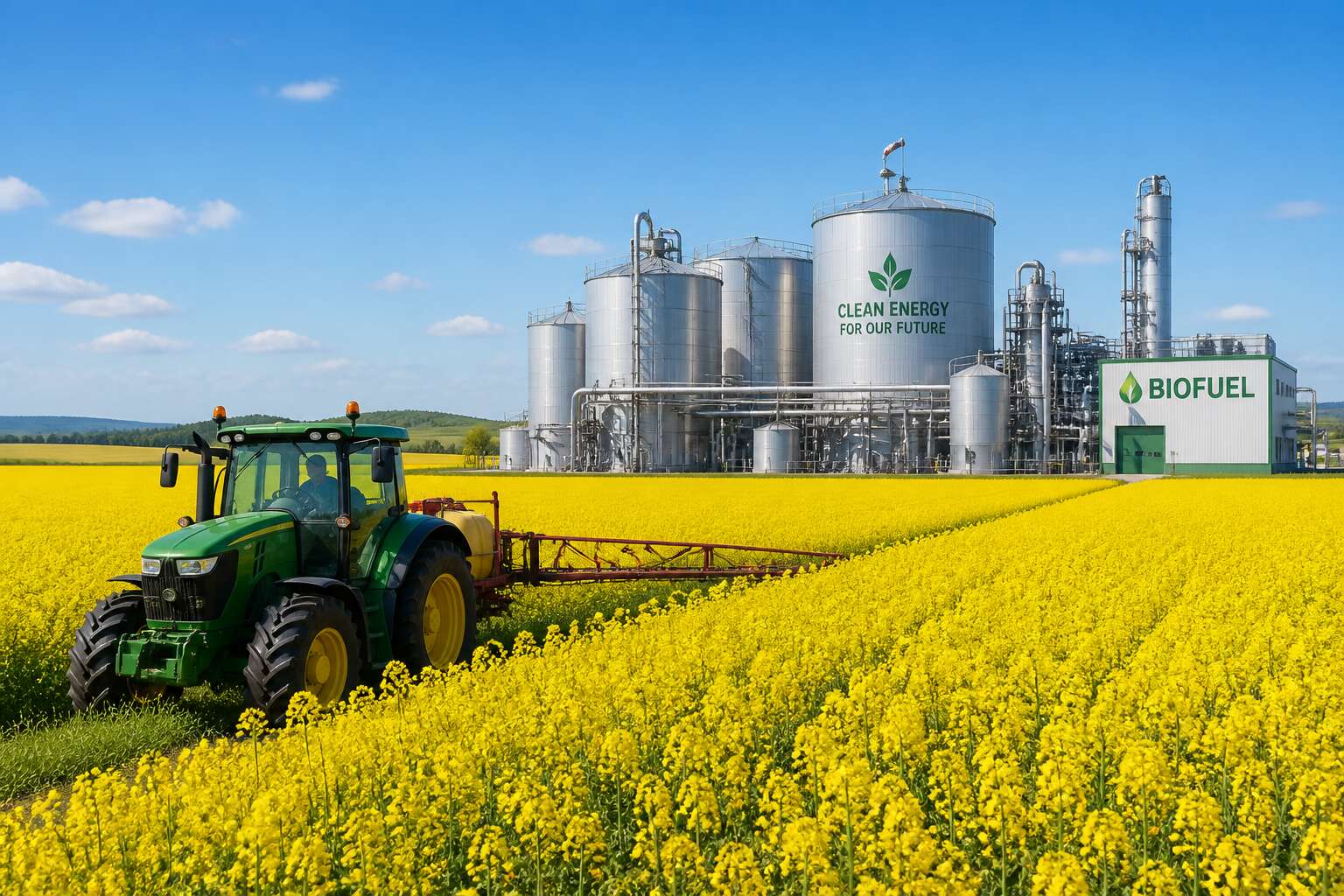
Global Biofuel Production Landscape
Leading Producers in the Americas
Ask most people where are biofuels produced and you will get a vague answer about fields and tractors. The reality is messier. The Americas dominate the global biofuel production landscape, with the United States and Brazil leading for very different reasons. The US ferments corn into ethanol on an industrial scale. Brazil turns sugarcane into ethanol at scale. Together, they account for the majority of global output. Argentina processes soybeans into biodiesel, while Canada experiments with advanced fuels from forestry waste.
Here is a look at the leading producers:
– United States: the corn based ethanol champion.
– Brazil: the sugarcane ethanol superstar.
These nations have answered where are biofuels produced with remarkable clarity. Their success comes from abundant agricultural land and heavy government mandates. The method is simple. Grow stuff, ferment it, and mandate that everyone buys it.
Europe’s Biofuel Manufacturing Zones
Ask the European Union where are biofuels produced and you get a shrug, a directive, and a shipment of rapeseed. The old world grows less corn than the Americas, so it improvises. Germany and France crush oilseed rape into biodiesel. The Netherlands refines imported used cooking oil into a product that smells faintly of chips.
- Germany: the biodiesel champion of Europe.
- France: rapeseed fields and strict blending quotas.
- Netherlands: turning greasy waste into renewable fuel.
These hubs sit near ports and processing plants. Mandates drive real action. Every diesel pump receives a splash of biofuel, whether it wants it or not!
Asia-Pacific Production Clusters
Asia’s answer to the global question of where are biofuels produced depends on which river you follow. Indonesia and Malaysia crush palm oil into biodiesel, their refineries humming beside straits that once carried spice. Thailand distills cassava and sugarcane into ethanol. China and India scrape used cooking oil from restaurant drains.
- Indonesia: B35 mandate pushes palm toward diesel tanks
- Thailand: E20 gasoline standard creates constant ethanol demand
- India: 20% ethanol blending target strains grain markets
These clusters emerge from different pressures. Land is scarce, so waste becomes a resource. But the moral cost remains. Palm oil plantations burn forests in Borneo, and the fuel that powers a truck in Cape Town may carry the ash of an orangutan’s home. This production turns out to be a question of whose losses we accept for motion.
Africa and Middle East Emerging Facilities
Where are biofuels produced today? Africa and the Middle East are staking a claim. South Africa’s ethanol distilleries in KwaZulu-Natal feed a national blending mandate. Kenya’s jatropha program turns semi-arid land into fuel. Nigeria converts cassava peels into ethanol for rural generators. The Gulf states, with abundant solar and waste heat, are testing algae ponds and pyrolysis units.
These facilities remain modest, yet they answer the question with concrete steps:
- South Africa’s Biofuels Act forces oil majors to buy local ethanol
- Kenya’s smallholder cooperatives press jatropha for lamp oil and diesel blends
- Dubai’s airport trials algae-based jet fuel from sewage-fed ponds
The scale is tiny compared to Asia or the Americas. But the logic is different: no forest clearing, no grain displacement. Just waste streams and idle land. For anyone tracking where are biofuels produced, these are the new coordinates.
Country-Level Production Hotspots
United States Corn Ethanol and Biodiesel Plants
The United States anchors biofuel output in the heartland, where vast cornfields feed a dense network of ethanol refineries. Iowa leads the pack, but the real strength lies in the integration across the Midwest. These biodiesel plants and ethanol facilities cluster together, sharing feedstocks, energy, and transportation routes. For anyone asking where are biofuels produced, the answer rests in these agricultural corridors that stretch from Nebraska to Ohio.
Here is how the top producing states rank:
1. Iowa holds the largest ethanol capacity by a wide margin.
2. Illinois specializes in biodiesel from soybeans.
3. Texas has scaled up renewable diesel operations rapidly.
The byproducts, particularly distillers grains, return to farms as animal feed. This efficient loop keeps rural economies strong while fueling the nation’s vehicles. It is a productive system built around a simple agricultural base.
Brazil Sugarcane Ethanol Industry
São Paulo alone processes over half of Brazil’s cane. The mills sit beside the fields because fresh cane loses sucrose within days of harvest. That geography answers where are biofuels produced, since production stays close to the crop. This is a far cry from the American corn belt model, where grain travels to central refineries. Brazil built the opposite architecture.
1. A mill can pivot between sugar and ethanol as world prices shift.
2. Bagasse powers the mills and feeds surplus electricity to the grid.
3. Flex-fuel cars let drivers choose ethanol at the pump.
This arrangement removes logistics bottlenecks entirely. I have watched how Brazil’s ethanol market self-corrects, shifting output based on global sugar demand. It is a nimble system formed by climate, acreage, and local engineering, not by federal decree.
Germany Biodiesel and Biomethane Sites
Germany operates more than 40 biodiesel plants, but geography surprises. Northern ports like Rostock crush rapeseed and handle imported palm oil; Bavaria’s facilities use cooking oil from Munich’s restaurants. This split answers where are biofuels produced because feedstock dictates site, not policy. Biomethane clusters sit in Lower Saxony, where dairy farms supply slurry and maize silage; upgraded gas feeds into local pipelines.
I find this decentralization striking, it reflects waste streams and agricultural capacity rather than central planning. For example:
- Hamburg focuses on rapeseed methyl ester for truck fleets.
- Lower Saxony injects biomethane into the national grid.
- Bavaria processes household cooking oil.
This architecture avoids centralization entirely, and it works!
China’s Municipal Waste-to-Biofuel Facilities
China answers where are biofuels produced with an unexpected feedstock: municipal kitchen waste. In Shanghai and Shenzhen, facilities turn leftover noodles, vegetable peels, and cooking oil into biomethane for city bus fleets. One Pudong plant processes around 300 tonnes of wet waste daily, producing fuel that displaces diesel at a meaningful scale.
The mechanics are straightforward. Waste enters digesters, bacteria break it down, and the gas is upgraded for vehicle use. Local governments, squeezed by landfill limits, treat these plants as essential infrastructure. Feedstock costs nothing and arrives daily.
Most facilities rely on three revenue streams:
- Tipping fees paid by waste collectors
- Government subsidies for renewable fuel
- Sales of digestate as farm fertilizer
So where are biofuels produced in China? The answer sidesteps soybean fields and cane plantations. Urban metabolism, the daily cycle of consumption and discard, supplies the fuel.
India’s Multi-Feedstock Biorefineries
India answers where are biofuels produced with a stubbornly pragmatic approach. Instead of betting on one crop, the country’s biorefineries juggle whatever biomass is cheapand abundant. In Uttar Pradesh and Maharashtra, old sugar mills now ferment molasses into ethanol while also burning sugarcane trash for process heat. Rice-growing states like Punjab feed straw into cellulosic units, converting a crop residue that usually goes up in smoke into fuel. That matters because stubble burning chokes delhi every winter.
These facilities stretchthe definition of a refinery. Consider what feeds them:
- Molasses from cane sugar
- Rice straw from paddies
- Palm oil effluent in Kerala
- Used cooking oil from urban restaurants
The real story is scale and cost. A single biorefinery in Tamil Nadu processes 500 kilolitres of bioethanol perday, using multiple feedstocks in parallel. Local governments collect agricultural waste at zero feedstock cost, turning pollution into a revenue stream. Where are biofuels produced in India? Themselves are built as stand-alone plants, scattered across states, designedoten every district with a waste problem. That’s why India’s production is spreading, not concentrating. It’s a messy, decentralized experiment, and it’s working.
Feedstock-Driven Production Regions
Corn Belt Ethanol Corridors
The answer to where are biofuels produced often begins with a map of the Corn Belt. This region is not a single plant or cluster. It is a web of ethanol corridors that stretch from the Dakotas through the Dakotas and Kansas. These corridors follow the rail lines that haul millions of tonnes of feedstock. Crushing and fermentation facilities sit within a short truck drive of the grain elevators, which cuts the cost of hauling the raw material.
Corn is heavy and cheap, so proximity matters. The ethanol corridors exploit this by placing production nodes at rail junctions and river terminals. That yields a dense production network across Iowa, Nebraska, and Illinois. The infrastructure dictates the flow:
- Grain arrives by truck from local farms.
- Ethanol leaves by rail to blending terminals.
- Distillers grains return to feedlots by truck.
This three-way logistics loop is what makes the region the world’s most efficient biofuel basin. In this specific context, where are biofuels produced depends less on national borders and more on freight corridors and crop yields. The Corn Belt’s advantage is not in any single technology. It is in the geometry of harvest, conversion, and distribution moving in a tight, repeatable circle.
Palm Oil Biodiesel Belt in Southeast Asia
The question of where are biofuels produced shifts focus in Southeast Asia. The answer follows the palm oil plantations of Sumatra, Borneo, and the Malay Peninsula. This is the Palm Oil Biodiesel Belt, where the feedstock determines the location of every conversion facility.
Indonesia and Malaysia supply roughly 85% of the world’s palm oil. That output shapes the biofuel economy. Crushing mills sit close to the fields because fresh fruit bunches begin to spoil within a day of harvest. The crude palm oil then travels to biodiesel plants, often located at coastal ports where tankers load the finished fuel.
This feedstock-driven arrangement creates a layered network:
– Crude palm oil mills operate inside the plantation zones.
– Biodiesel refineries anchor at port hubs such as Belawan and Port Klang.
– Distribution lines serve domestic blending mandates and export buyers.
Where are biofuels produced across this belt follows the cultivation map. The production sites are tied to climate, rainfall, and the converted peatlands that support the crop. Every tonne of biodiesel carries the trace of the tree and the soil where it originated.
Rapeseed Oil Processing in the EU
Across the European Union, rapeseed oil processing shapes the biofuel map. The question of where are biofuels produced finds its answer near the rolling yellow fields of France and the Czech Republic. Poland and Romania also host crushing facilities, each positioned to shorten the distance between harvest and refinery. This proximity matters because rapeseed spoils quickly, losing oil yield within weeks. So the plants cluster inside the growing regions, often beside rail terminals or barge docks.
- Northern France, feeding plants in the Grand Est.
- Silesia in Poland, serving local mills.
- Southern Romania, with newer refineries near Bucharest.
Every litre of biodiesel begins with a seed, a pressing, and a place tied to the soil. The EU’s processing corridors respond to both climate and infrastructure, making the production network as much a creature of geography as of industry.
Sugarcane-Based Production in Latin America
In Latin America, the answer to where are biofuels produced follows the sugarcane harvest. Cut cane loses sucrose within hours, so mills cluster beside the fields. This is feedstock-driven production at its most rigorous. The tropical lowlands provide the heat and rainfall the cane demands, and processing infrastructure sits close enough to the rows that I rarely see transport trucks running long distances.
Colombia’s Cauca River Valley operates year-round because staggered planting keeps cane flowing. Argentina’s Tucumán province crushes its own surplus for ethanol, while Guatemala and Paraguay run smaller mills tied to domestic blending mandates.
- Harvest crews cut and load cane within the same day.
- Continuous distillation keeps the plant active through the zafra.
- Bagasse, the leftover fibre, fuels the boilers that run the entire operation.
The cartography of where are biofuels produced shifts with each season, but the logic stays fixed. Production remains bound to soil, climate, and roads built for a crushing schedule.
Soybean Biodiesel Plants in Argentina
In Argentina, the answer to where are biofuels produced follows the soybean crop. The Pampas region grows the beans, and biodiesel plants cluster near crushing factories. This keeps the oil moving short distances from field to processor to fuel tank.
Three forces shape these locations:
- Harvest volumes in nearby provinces
- Export corridors such as the Paraná River ports
- Domestic blending mandates that require steady supply
I have visited plants outside Rosario where the smell of crushed soybeans hangs in the air. Production stays bound to the agricultural calendar, not to any single national grid.
Cellulosic Biomass Facilities in Scandinavia
In Scandinavia, the question of where are biofuels produced takes on a distinctly forested character. The region’s dense pine and spruce stands supply cellulosic biomass, converting forestry residue into ethanol and renewable diesel. These facilities sit close to pulp mills and sawmills, where the raw material is plentiful.
I have walked through plants in southern Finland where wood chips move from debarking drums to hydrolysis tanks without touching public roads. That short supply chain is the whole point.
- Proximity to timber harvest zones in Sweden and Norway
- Existing forestry logistics networks that lower collection costs
- District heating grids that absorb the low-grade heat from biorefining
The result is a production map shaped by tree lines, not storage tanks. When you ask where are biofuels produced in this part of Europe, the answer is wherever the forest converges with industrial infrastructure.
Infrastructure and Logistics of Production Sites
Co-location with Refineries and Agricultural Hubs
The question of where are biofuels produced often comes down to a single factor: logistics. Co-locating production with existing oil refineries reduces capital expenditure by enabling shared steam, electricity, and storage tanks. Agricultural hubs offer the opposite advantage, placing conversion units directly beside grain silos or sugarcane fields. This shortens the distance between harvest and processing, which matters because feedstock loses mass and value during transit!
Consider the physical assets that make a site viable:
- Rail connections for high-volume dry feedstock
- Pipeline access for blending with petroleum diesel
- Barge docks for waterborne grain and oilseed transport
Each element influences cost structure and resilience. Proximity to refineries also simplifies compliance, since finished biofuels can enter fossil fuel distribution networks without leaving the fence line.
Proximity to Distribution and Blending Terminals
Distribution terminals act as the final transfer point for every biofuel batch. The question of where are biofuels produced becomes less relevant if a plant cannot reach these blending sites quickly. Proximity to storage tanks and pipeline injection ports shortens delivery times and reduces contamination risk.
Blending terminals need consistent supply, sometimes at hourly intervals. Plants located within fifty kilometres can respond to demand shifts without holding costly buffer stock. Distant facilities depend on rail or coastal shipping, which adds delays and scheduling complexity.
- Direct pipeline connection enables continuous blending with diesel
- Truck loading racks support flexible, small-batch deliveries
- Onsite quality testing labs verify specifications before merging
These assets define how a production site interacts with the fuel market. In South Africa, coastal terminals near Durban and Cape Town anchor the supply chain, yet inland plants stay viable by building strong partnerships with local distributors. Ultimately, where are biofuels produced depends on this connection between conversion and consumption.
Port-Based Biofuel Export Facilities
Port-based biofuel export facilities answer where are biofuels produced when the goal is global trade. These sites pair deepwater berths with large storage tanks, letting vessels load directly from production lines. The Port of Rotterdam and Santos in Brazil handle millions of tonnes annually. For South African producers, export plants at Richards Bay or Saldanha Bay could reach European and Asian markets, yet current infrastructure remains limited. A working export terminal needs specific features:
- Dedicated jetties with flexible arms for different biofuel grades
- Segregated tank farms to avoid cross-contamination
- Vapour recovery units to meet emission standards
These facilities also require rail or barge links to inland processing centres. So the most accurate answer to where are biofuels produced may shift from domestic supply to export competitiveness.
Rural Cooperative Processing Units
In the rolling Free State, I’ve seen cooperative processing units turn sunflower seed or used cooking oil into fuel right beside the fields. A cooperative can process a few thousand litres per day, a scale that feels almost domestic. The infrastructure is straightforward:
- Small presses and reactors that fit under a barn roof
- Feedstock stores with temperature control
- Simple filtration and settling tanks
This setup shortens the journey from harvest to fuel. Farmers bring canola directly to the yard, and within days it becomes a usable batch. Rural units cannot rival industrial refineries, but they make production visible and local. So the answer to where are biofuels produced appears in your own district, not just at distant ports.
Rail-Served Production and Storage Depots
A train idling outside a Free State depot is a quiet answer to the question of where are biofuels produced. These rail-served storage depots turn logistics into a fine art. Large tanks hold ethanol, while dedicated sidings handle ten tankers per shift. The practical infrastructure includes:
- Automated loading arms with spill containment
- Heated pipes to keep fuel flowing in winter
- On-site quality testing labs
Located along the coal-to-road freight corridors, these depots connect Mpumalanga’s processing plants to Gauteng’s fuel blenders. A single rail car moves as much fuel as four trucks, which explains the modest hum of industry away from the highways. Storage buffers absorb harvest peaks, ensuring supply moves without crowding the roads.
New Frontiers in Biofuel Manufacturing
Algae Biofuel Pilot Plants
Algae biofuel pilot plants are rewriting the global energy map, often in places nobody expected. Coastal deserts, salty lagoons, and even abandoned industrial sites now host these test beds. This raises the sharp question of where are biofuels produced when traditional farmland isn’t an option. The answer is modular systems that use non-potable water and intense sunlight.
South Africa runs several demonstration units along its western coast. International operations in Hawaii, Israel, and the Netherlands push the same boundaries. Each facility cultivates high-lipid algae strains for renewable diesel conversion.
- Closed photobioreactors in arid zones
- Open ponds near nutrient-rich estuaries
These pilot plants shift output away from corn belts and palm plantations toward oceanside refineries. Yields per hectare exceed conventional crops, though scaling remains a costly hurdle. Still, the physical footprint of biofuel manufacturing is expanding, and the next decade will reveal which coastlines dominate.
Waste-to-Energy Conversion Sites
Waste that once rotted in landfills now powers trucks in South Africa. Ask where are biofuels produced, and you might get an answer that smells like sewage. Waste-to-energy conversion sites turn organic leftovers into usable fuel using enclosed digesters and pyrolysis units.
A facility in Durban converts landfill gas into electricity and biomethane, while a Cape Town plant processes slaughterhouse residues into biodiesel for trucks. These operations avoid farmland completely, relying on predictable urban waste streams. They also cut methane emissions, a stubborn greenhouse gas.
Some sites sit directly at wastewater treatment plants to capture biogas from sewage sludge. Typical setup for a modern site:
- Receiving pit for sorted organic waste
- Anaerobic digester maintained at 37 degrees Celsius
- Gas upgrading unit for biomethane injection
Advanced Biofuel Refineries in the Nordics
While the rest of the world argues over crop allocation, a quieter revolution is taking place in the Nordic countries. These advanced biofuel refineries are answering the question of where are biofuels produced by looking north to the forests, not the fields. The region’s vast pine and spruce residues, along with logging slash, are being converted into high-grade renewable diesel and jet fuel. This process, known as hydrothermal liquefaction, mimics the geological creation of fossil fuels but compresses the timeline into hours.
The strategic advantage here lies in the symbiosis with existing pulp and paper mills. These refineries co-locate with established industrial infrastructure, using excess heat and steam from the mills to drive their chemical processes. The feedstock never travels more than 100 kilometres from the forest floor to the reactor. This localised approach sidesteps the logistical nightmares of agricultural collection and avoids the ethical dilemmas of food displacement.
– The reactors operate at extreme pressures, typically above 200 bar, to break down lignin.
– Hydrogen, sourced from electrolysis powered by hydroelectric dams, is added to stabilise the final fuel.
– The output is a drop-in fuel that requires no engine modification.
The carbon intensity of this fuel is remarkably low, often below 15 grams of CO2 per megajoule. For heavy transport sectors that cannot easily electrify, such as long-haul trucking and aviation, this represents a critical pathway. The Nordics are proving that energy independence can be built on waste wood and water, expanding the map of where are biofuels produced to include the cold, coniferous industrial heartlands.
Investment Zones in the Middle East
The Middle East is constructing dedicated biofuel manufacturing investment zones. In the UAE and Saudi Arabia, these zones occupy former salt flats, using solar thermal arrays and municipal waste. The facilities operate without the constraints of arable land.
Rather than competing with food crops, these facilities rely on halophyte plants irrigated by seawater and algae fed by captured CO2. What I find striking is the investment structure:
- tax holidays for foreign partners
- guaranteed off-take agreements
- streamlined export licences
By situating production in arid zones, the region proves that the question of where are biofuels produced can have a distinctly industrial, non-agricultural answer.
Decentralized Small-Scale Biogas Producers
In the South African highveld, the question of where are biofuels produced is gaining a new answer: on individual farms and township micro-sites. Decentralized small-scale biogas producers are turning livestock manure and food waste into methane for heating and electricity. These units operate at a fraction of the scale of a commercial refinery, yet they offer a resilience that large plants cannot match.
A typical installation consists of a sealed digester, a gas holder, and a simple pipeline. The feedstock is local. The labour is local. The gas is consumed within a few kilometres of its origin. This shifts production from centralized corridors to dispersed rural nodes.
The spread of applications continues to grow:
- Smallholder dairy farms capturing slurry for cooking fuel
- Urban food markets converting spoiled produce into biogas
- Community facilities processing abattoir waste
Each site sets its own answer to where are biofuels produced, without relying on industrial zoning or export infrastructure.
Green Hydrogen and Biofuel Hybrid Facilities
Green hydrogen and biofuel hybrid facilities are rewriting the map of energy production. These sites pair electrolysers with biomass reactors, using renewable electricity to crack water into hydrogen, which then upgrades vegetable oils and animal fats into drop-in fuels. A single plant can shift between hydrogen output and biofuel synthesis depending on grid conditions. That flexibility makes them a new frontier for answering where are biofuels produced.
South Africa’s Northern Cape solar corridor, alongside maize and soya residues from the Free State, offers the raw ingredients for such hybrids.
- Solar arrays power the electrolysis stack
- Biomass digesters provide a steady carbon feedstock
- Hydrogen injection stabilises the final fuel blend
The capital intensity remains high, but pilot projects in Europe and Australia have proven the concept. For South Africa, the next decade will likely see the first of these facilities anchored to existing agricultural processing zones, creating a new answer to where are biofuels produced.

0 Comments