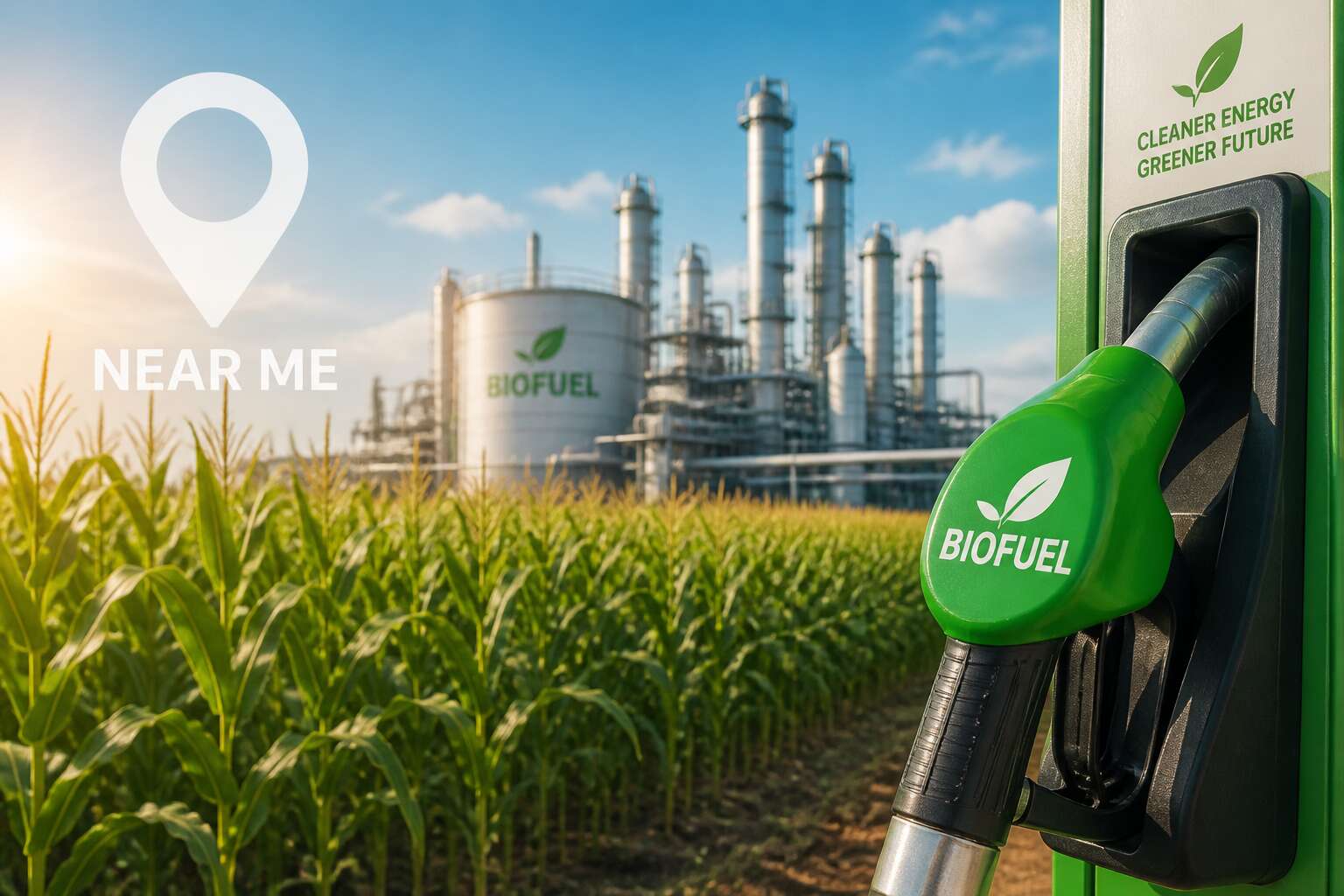
Discovering Local Renewable Fuel Options
Understanding Common Types of Regional Bioenergy
South Africa’s Biofuels Regulatory Framework targets a modest 2% penetration of the national fuel pool. That figure represents a threshold of tangible change, and for motorists, it translates into a widening array of choices. The hunt for biofuels near me once ended at the local filling station’s diesel pump. Now, the search leads to agricultural cooperatives and small-scale processing plants scattered across Mpumalanga and the Western Cape.
- Biodiesel, typically rendered from canola or sunflower oil
- Bioethanol, a byproduct of sugarcane fermentation
These fuels carry distinct cold-flow properties and cetane ratings, so compatibility with your engine remains the deciding factor.
Key Differences Between Ethanol and Biodiesel Sources
Petrolheads assume ethanol and biodiesel are interchangeable. They are not! Ethanol begins as sugarcane crushed on KwaZulu-Natal mills, then fermented and distilled. Biodiesel starts as canola or sunflower seed, pressed for oil. The cane stalks are bulky and water-hungry. The seeds hold their value in a sack. One fuel carries the flavour of a sugar refinery, the other smells like a chip shop, which is not a criticism.
Climate shapes each crop. Sugarcane wants summer rain and heat. Canola copes with the Western Cape’s wet winters. A drought in one region touches the fuel supply, while the other region carries on. Your search for biofuels near me might lead to a cooperative depot or an oilseed press in a farm shed.
The chemistry follows the crop, so your engine’s tolerance decides the winner.
Assessing Feedstock Availability in Your Area
Finding biofuels near me used to mean sniffing out the nearest sugar mill or hoping a farmer pressed extra canola. These days, the real trick is matching the fuel to what actually grows in your region. You can’t run a bakkie on good intentions if the local soil only supports macadamia husks. Before you commit to a tank, audit the agricultural calendar, the harvest windows, and the distance between the farm gate and your fuel cap.
Local renewable fuel options depend entirely on this supply chain math. Here’s a quick checklist for your next fill-up:
- Check if maize silage or sorghum is processed within 50 kilometres.
- Ask cooperatives about seasonal oilseed press cycles.
- Verify whether municipal waste streams are already earmarked.
That last one matters more than you think! Assessing feedstock availability in your area isn’t glamorous, but it saves you from importing a fuel source that arrived on a cargo ship. The best biofuel is the one that doesn’t travel further than your grocery run.
Strategies for Locating Nearby Sustainable Fuel Suppliers
Utilizing State and County Renewable Energy Directories
Across South Africa, the search for biofuels near me often begins with a phone call to the wrong department. Provincial energy directories list certified suppliers, but many drivers skip this step entirely. The Central Energy Fund publishes regional data, while municipal environmental offices maintain contact lists for biodiesel producers and ethanol distributors. I have found that combining these sources yields a more accurate picture of what is actually available within a practical driving distance.
A methodical approach involves cross-referencing multiple records:
– Check the provincial renewable energy database for registered fuel blenders.
– Contact the local district municipality’s energy desk for permitted biofuel storage sites.
– Verify the supplier’s license with the National Regulator for Compulsory Specifications.
These directories often reveal smaller operations that do not appear in national searches. The key is persistence; the first directory might be outdated. When you finally locate a verified supplier, the distance to that pump becomes a real measure of your region’s biofuel infrastructure. Searching for biofuels near me without consulting these records usually means relying on word of mouth, which can lead to obsolete information.
Connecting with Agricultural Cooperatives and Farmer Networks
While bureaucrats chase paper trails, farmers operate on a simpler network: the bakkie queue at the local cooperative. Agricultural cooperatives hold the unofficial map of biofuels near me, because they know which fields produce canola for biodiesel and which silos hold fermentable grain. A co-op manager once described the best supplier as the farmer three plots down with a backyard distillation rig.
I have found value in attending cooperative AGMs and asking about oilseed crushing schedules. The conversation reveals more than any online registry.
– Collectives pooling oilseed deliveries for regional pressing.
– Coops offering shared bulk storage for liquid fuel.
– Farm-scale biodiesel units selling surplus to neighbours.
These networks remain invisible to digital maps, which is precisely their charm.
Leveraging Online Mapping Tools for Fueling Stations
The same smartphone that routes you around potholed streets can also identify which fuel stations stock sustainable alternatives. Most mapping applications now allow filtering by fuel type, yet few drivers open the settings. A deliberate search for ‘biofuels near me’ on dedicated station locators yields more truthful answers than generalised search engines.
Retailers in South Africa increasingly list their ethanol blends and biodiesel stocks on digital platforms. Apps like Waze and Google Maps rely on user reports, so stations offering biofuels near me often appear under uncommon labels such as ‘E10’ or ‘green diesel’. For a structured approach, the South African Petroleum Industry Association publishes a station map that includes certain biofuel mixes, while the Department of Mineral Resources and Energy offers an energy dashboard with distribution points.
Useful mapping filters include:
- Diesel pumps with biodiesel blend percentages listed
- Stations citing South African Bureau of Standards certification
- Retailers cross-referenced against the Automobile Association’s fuel report
Contacting Local Waste Management and Recycling Centers
Johannesburg’s municipal depots process tonnes of used cooking oil every week. These facilities hold answers that fuel station maps cannot. In South Africa, depots handling organic waste often know which transport operators run on biofuel. A conversation with a depot manager reveals a supplier list that never appears online.
Recycling centres that process green waste often partner with anaerobic digestion plants. They sell biogas or refine it into transport fuel. Asking about drop-off schedules leads to the same distribution points where you can locate biofuels near me.
- Used cooking oil collection routes
- Licensed waste oil processors
- Municipal tender boards with biofuel supply contracts
For drivers in Cape Town, Durban, or Gqeberha, waste management staff can name depots storing biodiesel blends. I have heard depot managers describe fuel buyers arriving after a phone call. A direct question about tanker movements yields a clearer answer than any search for biofuels near me.
Engaging with University Extension Programs for Referrals
University researchers carry knowledge that has not been uploaded anywhere. In bioenergy departments across South Africa, lecturers hold referral lists built through years of fuel testing. At the University of Pretoria, one senior researcher told me she sends logistics firms to specific biodiesel refiners because her name travels with the recommendation. Academic referrals are honest because they must be.
Extension officers host field days where producers run their fuel in front of an audience. A single conversation at one of these events outperforms any generic search for biofuels near me. You are speaking to people who watched the fuel perform under load.
Sources to pursue include:
– Research publications naming specific local producers
– Extension officers with private consulting contracts
– Thesis projects that audit supply chains
Academics remember which suppliers failed quality checks and which did not. That memory is the quiet, verified path to biofuels near me.
Evaluating Costs, Quality, and Vehicle Compatibility
Comparing Price Per Gallon Against Conventional Petroleum
Let’s be honest, the first question that creeps into any driver’s mind when they spot a pump advertising alternatives is the cost. You will find that the price per gallon for many regional biofuels often sits at a slight discount to conventional petroleum, but that gap is not universal. It shifts with the harvest season and local production volume.
The mathematics becomes more complex when you factor in energy content, as some blends deliver slightly lower fuel economy. Your actual cost per kilometer hinges on this efficiency loss.
Here is how to break down the compatibility puzzle:
– Check your owner’s manual for the approved blend ratio, often E10 or E5.
– Confirm that your fuel system’s seals and gaskets are compatible with higher ethanol concentrations.
– Verify that the local supplier’s biofuel meets the South African Bureau of Standards (SABS) specifications.
Beyond the price sticker, the quality of the feedstock dictates performance. Lower grade raw materials can introduce contaminants that clog filters. When you search for biofuels near me, do not just compare the liter price. Compare the certification and the refining process. A marginally cheaper product could lead to expensive engine repairs, making the petroleum equivalent a more prudent investment.
Checking Fuel Certification Standards and Blends
Searching for biofuels near me often ends with a quiet moment of uncertainty at the pump. The blend might look correct, yet the certification behind it deserves equal scrutiny. The South African Bureau of Standards (SABS) stamp serves as your assurance that the fuel has passed rigorous testing.
Vehicle compatibility remains a personal matter. Your owner’s manual discloses the approved blend ratio, and modern fuel systems tolerate higher ethanol concentrations only when the seals and gaskets are designed for them. Older vehicles may register their displeasure with a swollen fuel line or a hesitant start.
- Confirm the blend ratio approved for your specific model.
- Inspect your fuel system’s seals for ethanol resistance.
- Verify the supplier’s SABS certification before filling.
Cheaper feedstocks can introduce particulates that clog filters, so the cost per liter at a biofuel supplier near me is not the whole narrative. Certification and refining quality determine whether that discount represents a bargain or a liability.
Consulting Manufacturer Guidelines for Flex-Fuel and Diesel Engines
Comparing the price per liter of biofuels near me requires looking past the pump display. Quality issues such as water content or particulate matter create costs in filter replacements and injector service that offset any small savings.
Your manufacturer’s guidelines resolve compatibility questions. Flex fuel vehicles tolerate higher ethanol blends only when the manual specifies them. Diesel engines often demand biodiesel with specific cold flow additives for winter use.
- Document the exact blend ratio from your owner’s manual
- Confirm your engine’s seal material rating
- Request a certificate of analysis from any new supplier
I have seen drivers ruin fuel pumps by ignoring these steps. A cheap source becomes an expensive lesson. So verify every detail before committing to a supplier of biofuels near me. The manual takes ten minutes to read and prevents costly repairs!
Examining Storage Requirements for Home and Fleet Use
Fuel exists quietly until you count what it takes to keep it usable. A neighbour in the Free State lost an entire tank of biodiesel to moisture because his storage tank had a cracked gasket. When you find biofuels near me, the listed price rarely includes the cost of safe handling.
Home users can manage with sealed drums and desiccant breathers. Fleet operators need fixed tanks, water separators, and a regular turnover plan. Ethanol blends absorb water quickly, so vapour proofing matters. Biodiesel thickens in winter, so insulation and heated lines become part of the cost.
Consider these storage basics:
1. Use tank materials matched to the fuel blend.
2. Install water filtration at the dispensing point.
3. Keep a written stock rotation schedule.
Suppliers of biofuels near me often provide bulk delivery pricing, but only if your tanks meet their inspection standards. That inspection is worth the time.
Reviewing Bulk Purchasing Options and Delivery Services
Price per litre tells only a fraction of the story. When I compare biofuels near me, I look at the full equation: base cost, delivery fees, and the subtle arithmetic of what a poor batch will cost in clogged filters and lost time. Quality is not a luxury here, it is a quiet necessity.
Your vehicle’s warranty hinges on certified blends. A flex-fuel engine tolerates E85, but a standard petrol engine will surrender to it with a groan. Check the manufacturer’s guidance before you commit to any source. The fuel must match the machine.
Bulk purchasing demands its own discipline. Suppliers offer discounts for 1,000 litre deliveries, but that saving evaporates if your consumption is slow and the fuel degrades in the tank. Consider this before committing:
- Assess your monthly burn rate against the storage capacity you have.
- Confirm the delivery schedule and whether the supplier will wait for you to be present.
- Ask for a certificate of analysis, a paper trail that ensures consistency.
Delivery services vary by region. Some suppliers will drop a pallet of drums at your gate. Others require a forklift and a clear driveway. I have seen farmers in Mpumalanga coordinate deliveries around harvest schedules, while urban fleets in Gauteng prefer a fixed weekly slot. The fuel itself might be identical, but the logistics shape the value.
A trusted relationship with a supplier who tests each batch is worth more than a cheaper quote from a stranger. When you search for biofuels near me, you are really searching for a partner who understands your equipment and your timeline.
Identifying Seasonal Variability in Local Fuel Production
Seasonal variability shapes the local biofuel market more than most buyers expect. Maize-based ethanol flows peak after the autumn harvest in Mpumalanga, while biodiesel from used cooking oil tracks the rhythm of restaurant trade. A January quote for biofuels near me will not hold in June.
I have seen fleets budget for winter diesel as if it were summer fuel. Cost evaluation must account for these swings. A winter batch behaves differently during cold starts, and vehicle compatibility changes with the season. Check the cloud point, not the price alone.
- Track harvest calendars for feedstock crops.
- Ask suppliers about seasonal blend changes.
- Verify your engine’s tolerance for winter additives.
Assessing Environmental and Community Advantages
Measuring Carbon Footprint Reductions with Regional Sources
When I started tracing the actual carbon savings of regional fuel, the numbers surprised me. A litre of locally produced biodiesel from used cooking oil can cut lifecycle emissions by roughly 80% compared to fossil diesel, but only if collection and processing stay within a short radius. That is where geography becomes a moral question as much as a logistical one.
Every kilometre a feedstock travels adds invisible weight to your footprint. Sourcing from nearby farms or municipal depots shrinks that burden while keeping money inside your community. I have watched small cooperatives in the Western Cape turn sunflower crush into fuel, and the social ripple effect is tangible when I search for biofuels near me.
- Local production shortens supply chains
- Communities retain more energy spend
- Emissions claims become verifiable on site
Supporting Rural Economic Growth via Locally Produced Energy
The diesel pump at my local co-op feeds on golden oil pressed from sunflowers grown twenty kilometres away. Every litre sold there keeps its value within the valley, funding school repairs and infrastructure that fossil fuels never touch.
Locally produced energy creates cycles of reinvestment. Farmers gain a second income from crop residues. Municipal waste becomes a resource instead of a disposal problem. Communities start to recognize that their own land holds solutions.
- Jobs remain close to home
- Energy spending recirculates for years
- Fewer tanker trips reduce road wear and risk
Searching for biofuels near me turned up a small plant that employs eleven people. That scale matters. Rural economic growth rarely arrives as a dramatic event. It accumulates in steady, measurable ways, like the aroma of cooking oil transformed into something useful.
Exploring Incentives, Rebates, and Tax Credits for Adoption
Assessing environmental and community advantages begins with measuring what fossil fuels cannot itemize. A litre of regional biodiesel reduces suspended particulates near school routes. Local production curbs odour from open air waste; the same biomass that once attracted pests now serves a municipal purpose. Community benefits include reduced methane escape and civic pride.
Exploring incentives, rebates, and tax credits for adoption requires asking the right provincial office. South Africa’s section 12B allowance lets farmers deduct 50% of capital costs immediately. Some municipalities offer property rate rebates for installations. The list below shows where to begin:
- The South African Revenue Service’s renewable energy tax incentive
- Municipal green energy rebate programmes
- Provincial energy fund grants
Searching for biofuels near me often uncovers these channels after pressing an official for details. The paperwork is dense, but the payoff is a biodiesel still that runs on sunflower pressings.
Understanding Land-Use and Sustainability Certification Issues
Searching for biofuels near me should not require a law degree, yet here we are. The environmental math is simpler. A regional biodiesel plant turns waste cooking oil into fuel, cutting methane release and reducing the odours that plague nearby neighbourhoods. Community advantages extend beyond air quality. Local production keeps money in the local economy, and fewer diesel fumes near school routes mean parents breathe easier.
Land-use questions demand scrutiny. Sustainability certification exists because some biofuel crops compete with food production. Ask for the certification documents before signing anything. The South African certification landscape includes:
- Roundtable on Sustainable Biomaterials certification
- South African National Standards for biofuel sustainability
- Provincial environmental impact assessments
Certification processes vary by province. Some suppliers claim sustainability without paperwork. Verify, verify, verify. The honest operators welcome questions about sourcing. The dubious ones deflect.

0 Comments